
By Lacey Yates
Regular hood trimmings are so important. I prefer trimming hooves every 6-8 weeks. When kept up with, the trimming job itself is no big deal. However, when are badly overgrown the task becomes really unpleasant and issues like foot rot and lameness show up. Your animal depends on their hooves and legs to get them to feed and water. In the wild, goats naturally wear their hooves down. Domestic goats aren’t able to do this, so it’s the producers job to keep their hooves in top condition.
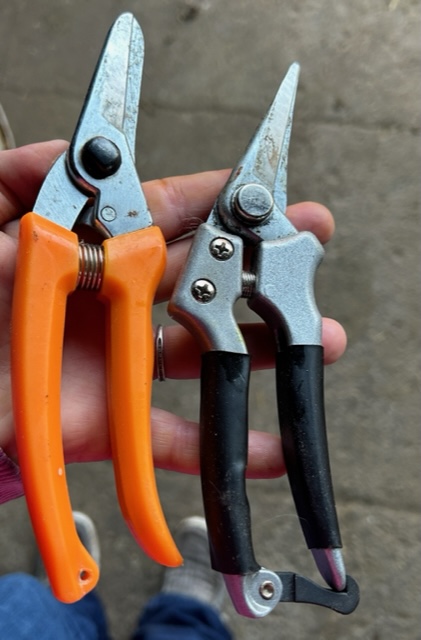
The equipment needed for hoof trimming is pretty basic. Invest in a good pair of sharp goat trimmers. I’ve gone through countless pairs in the past, usually buying 2-3 pair a year. I recently purchased the “Silverline” hoof trimmers online, made by Capralite. At about $32, they’re reasonably priced (compared to the electric Hoof Boss at $270). They are still nice and sharp after an entire season of trimmings. I also would recommend a pair of leather gloves for the beginner.
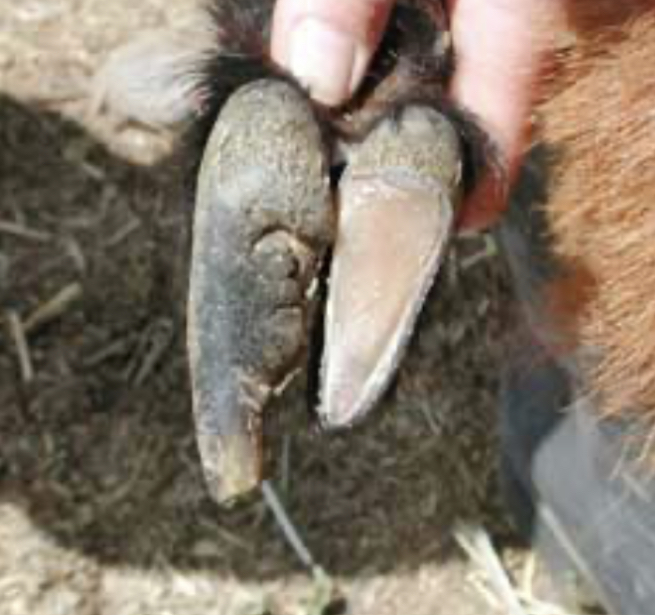
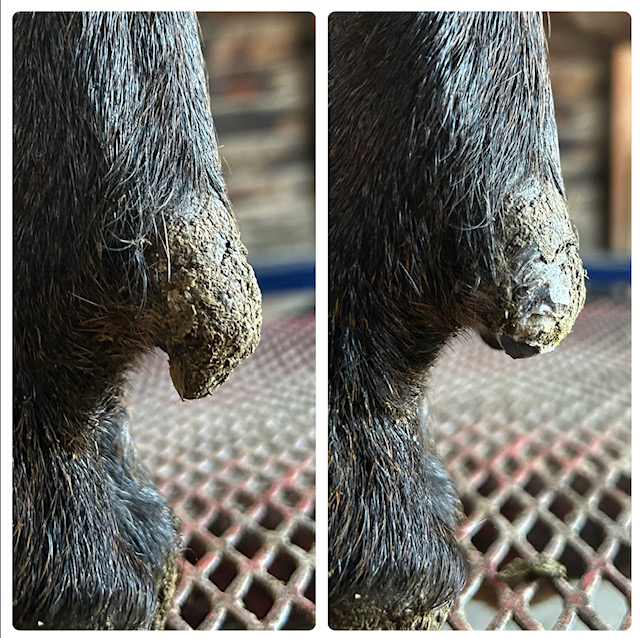
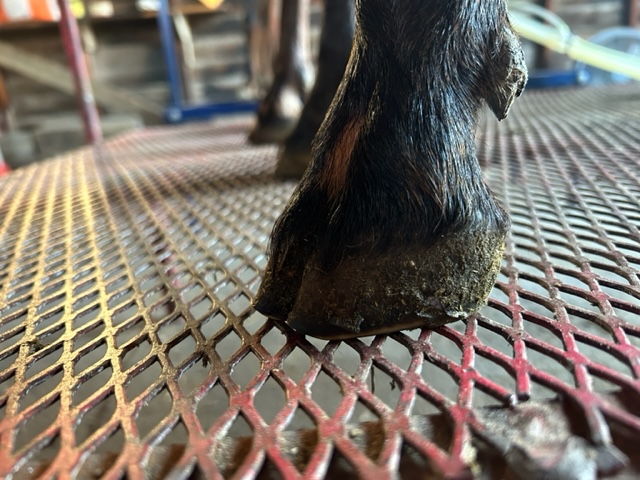
Before you begin trimming, it’s handy to compare the hooves to those of a newborn goat kid if you are able. Their hooves are in perfect condition, and what you should strive for. The hoof wall is what tends to overgrown and you want to trim it so it’s level to the sole and parallel to the foots hairline. The heels also may need trimming, as will the dewclaws of an older goat.
You will begin by safely securing the goat so you can work on the hooves. For me, I prefer to just use my milk stand. Some people find it easy to use a halter and tie the goat securely to a fence. It may take a little experimenting to see what works best for you.
Once your goat is safely secured, and you’ve inspected and picked the hoof clean, it’s time to begin trimming. It may feel intimidating at first, but just take your time, go slow, and trim small amounts at a time. Facing the goats tail, pick up a leg at her pastern and bend it at the knee so the hoof is facing up at you. Do not twist her leg to the side, but keep it in a natural position.
If the hoof bleeds when trimming, don’t panic. You can put a little blood-stop powder on it, or apply pressure to the area for a bit allowing it to clot. Trim smaller amounts to avoid this.
The more often you trim hooves, the easier and quicker the task becomes. It’s much easier to keep up with hoof trimming every 6-8 weeks versus a major battle, trying to correct badly overgrown hooves. Your goat will thank you for taking care of her!
Hoof Trimming Steps:
- Safely secure goat.
- Pick out dirt with point of trimmers.
- Cut away hood overgrowth of excess hood wall making it level to the sole.
- Trim heels making hoof parallel to hairline.
- Check dewclaws and trim as needed.
- Repeat 3 more times.