
By Raelene Bradley
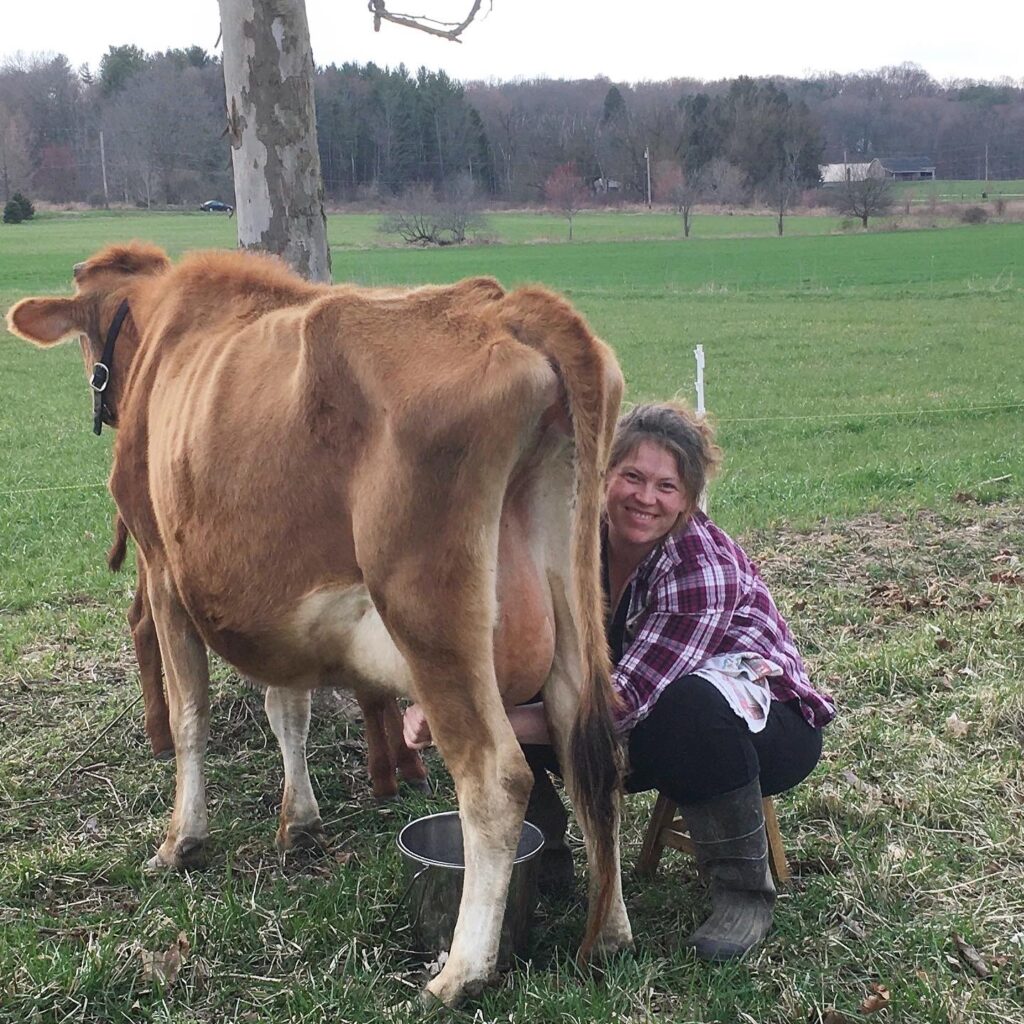
I had been dreaming of a milk cow for years. When we moved to the farm here in NE Ohio in 2015, we had a lot of work to do (as I’m sure each of you know all too well!), but I kept my eye on the prize: a milk cow of my own. After several years of hard work building infrastructure, starting a garden, canning all the things, and raising chickens and pigs, we would sit down to eat, look at the bounty of good food we’d raised with our own hands and think: “We’re a milk cow away from everything here being grown right here on the farm.” We kept working and dreaming and preparing. And eventually, the stars aligned and we brought home our rockstar of a milk cow, Sandy.
Too Much Of A Good Thing
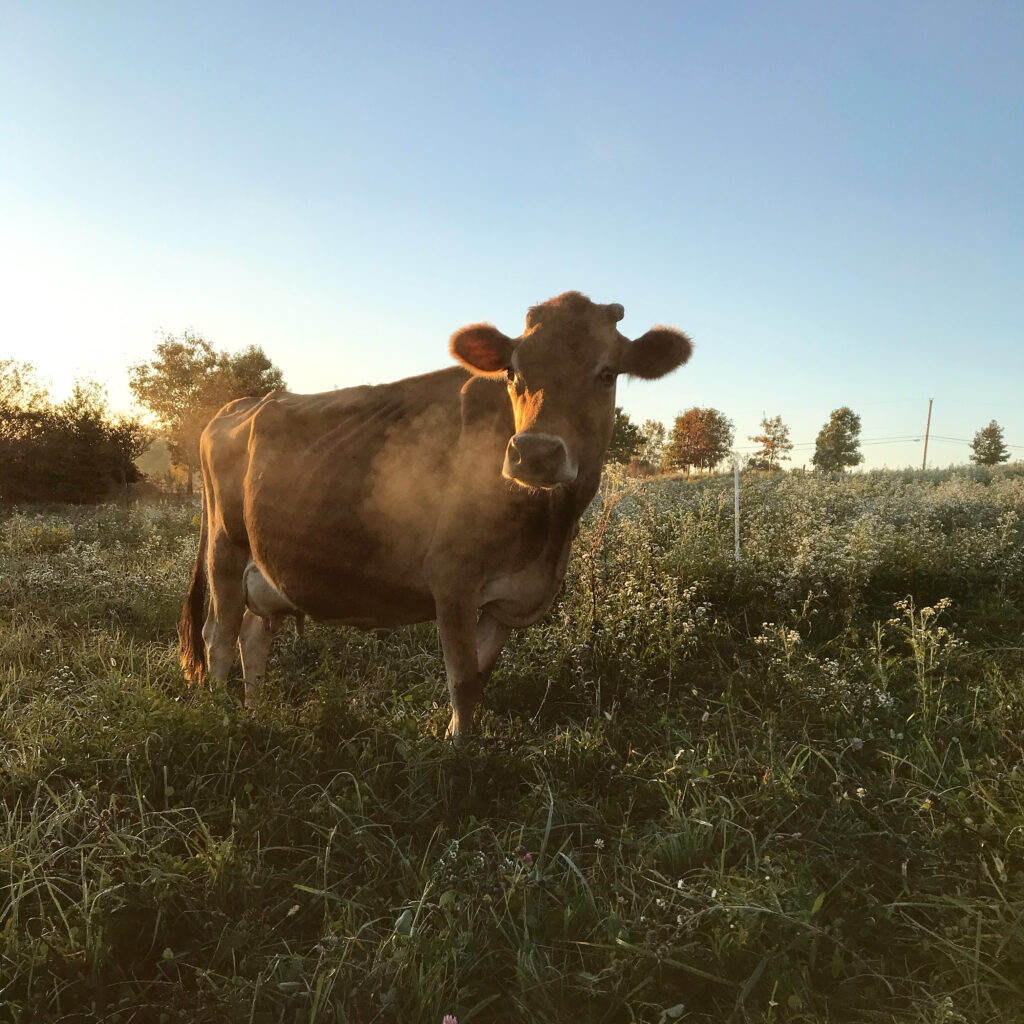
It didn’t take long to realize that one milk cow produced way more milk than we could possibly use – even as a family of seven. We drank 10-12 gallons of milk a week, but it seemed to hardly make a dent. I skimmed cream and made butter – so much butter. I learned to make cheese – lots and lots of cheese. I made all the dairy things and we still had so much. We fed skimmed milk and all that whey to chickens and to pigs. We diluted it and used it as fertilizer in the garden. We used as much as we possibly could, and we still had more than enough to meet our needs and then some.
With the abundance that came from keeping and loving on a family cow, I knew we had more than enough to share, and so I started looking into how to make that happen. Unfortunately, the sale of raw milk is illegal in Ohio. By law, we cannot sell, barter, trade, or engage in any other exchange for raw milk or any of its derivative products (cream, yogourt, cheese, butter, buttermilk, etc). But there was a loophole: we could establish a herd share.
There were plenty of obstacles, and the whole endeavor did not come without risk, but in the summer of 2021, with one milk cow who produced abundantly, and a desire to serve and to share, I made a handful of shares available to a few hyper-local families. As I write this now in October 2023, we are milking four cows, have more than 75 herd share members, a waitlist as long as my arm, and half a dozen new inquiries every week. With an ever-increasing interest in the benefits of raw milk among consumers, more and more people are actively looking for small, reputable, local farms to source nutrient-dense, clean and delicious raw milk for their families. I wish there were more of us!
Raw Milk Laws Vary State To State
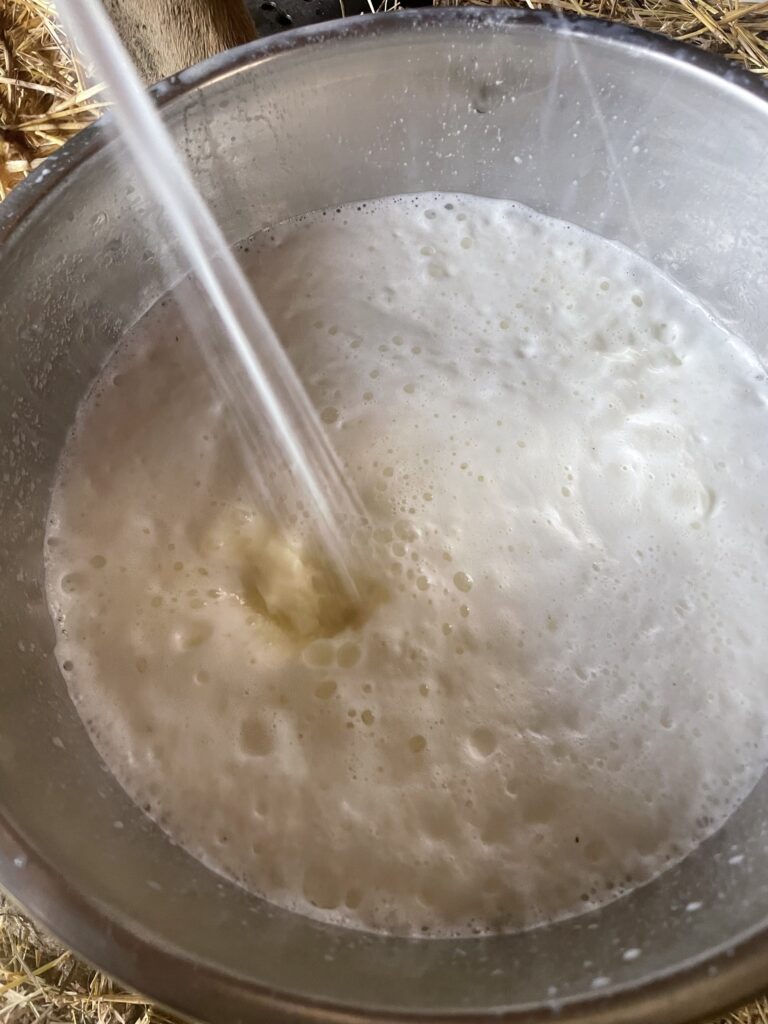
The laws and statutes regulating the production, processing, labeling, and sale of raw milk vary widely from state to state. In California, you can purchase raw milk at an average grocery store. In Oregon, you can purchase raw milk directly from the farm. In Florida, raw milk must be labeled “for animal use only.” But as long as it’s labeled in that way, anyone can purchase it (on the farm, at the farmer’s market, etc.) with the understanding that it is to be fed only to animals (wink wink). In Ohio, and in many other states, the sale of raw milk is strictly prohibited. But also in Ohio, and in many other states, there is an allowance for a herd share arrangement.
The Herd Share Agreement
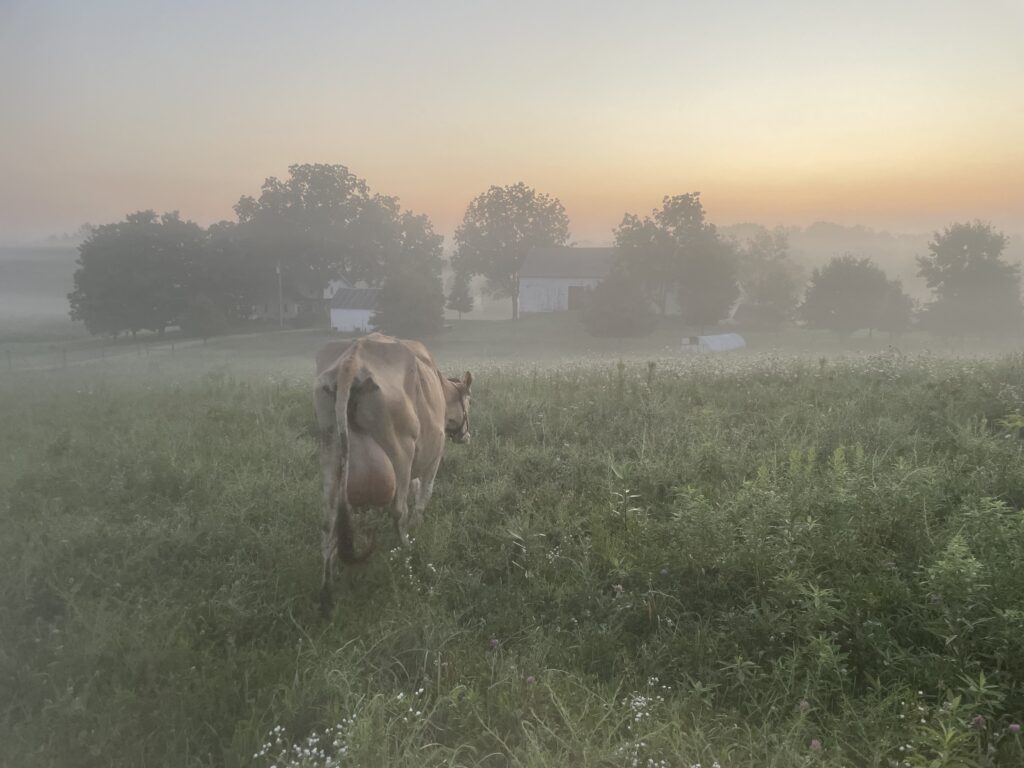
As part of the herd share agreement, a farmer will offer for sale x amount of shares in his dairy herd. When you purchase one of those shares (for a specific one-time cost) and sign the Bill of Sale, you become a part-owner of that farmer’s dairy herd. And, as a part-owner, you are then entitled to the profits of that ownership. That is, raw milk. And, as a part-owner of that herd, you are also required to help contribute financially to the herd’s care and maintenance. As such, you will pay the farmer a monthly maintenance fee to feed your cow, care for your cow, milk your cow, and love your cow.
The herd share agreement is very clear: you are not purchasing milk. You are investing in livestock (quite literally); you are paying the farmer to take care of your livestock investment, and as such, get to enjoy a portion (equal to your share) in the profits of that investment. Each state’s laws will vary and so it is imperative that you become familiar with the laws regulating the sale of raw milk in your state.
Writing A Contract
If you’re interested in setting up a herd share agreement, I strongly discourage you from looking up someone else’s contract, changing a few phrases, and making it your own. Here’s why: every state and every farm is different. You want a contract that serves you. You want a contract that adequately addresses the laws and regulations in your state, that accurately reflects the conditions on your farm, that protects your family, your farm, and your assets, and that clearly directs all the details of how you want your herd share to run. In that regard, I strongly recommend that you work with an attorney or legal representative who will make sure that your contract achieves all that it needs to.
This element was the biggest hurdle for me as I contemplated starting a herd share. Legal representation is expensive, no matter how you dice it. And there have been real instances of farmers being fined, sued, and worse, for skirting state regulations. And then I found FTCLDF – the Farm To Consumer Legal Defense Fund.
As a farmer and member of the FTCLDF, you have access to their team of legal representatives who will work closely with you in any capacity that you need. For me, of course, that was creating a herd share agreement contract. But they offer many other services as well. Their goal, after all, is to help farms connect with consumers and to navigate the legal pathways that may make that difficult. I should note here that I am not affiliated with the FTCLDF and do not receive commissions in any way. This is not an advertisement. But they have made what I do possible. Without them, I’d still be feeding all my extra milk to the pigs (which isn’t a bad thing, mind you, just not nearly as profitable!).
An annual membership to the FTCLDF is totally affordable and worth the cost many many times over for the peace of mind it gave me to proceed with confidence, knowing that I had crossed all the T’s and dotted all the I’s when it came to abiding state regulations and creating a contract that served my needs and would keep my farm and its assets secure.
Calculating Shares & Cost
There are a lot of practical details and logistical elements to figure out when you’re running a herd share and a lot of things to consider as you get started. Let’s talk about a few of them.
First – your contract will make clear that each share purchased will equal a specific percentage or yield of the milk produced by your herd each week. As the farmer and the herd share manager, you get to decide what that percentage is and how it will be represented. I need my life to be simple so I decided that each share = 1 gallon/week.
Second – you will need to decide how many shares you will have available for members to purchase. This number is 100% determined by your cow’s production. You must consider her average production, but also take into account how much she will produce when her production decreases (either as she nears the end of her lactation and/or in winter conditions). Sandy was reliably producing 4 gallons/day so when I initially started, I made 5 shares available: 1 gallon for every day of the week. Over the next several months, I increased that amount to 12 shares.
Here’s the math on that thought process:
4 gallons/day = 28 gallons/week 12 shares/week = 12 gallons/week 28 gallons (total production) – 12 gallons (herd shares) = 16 gallons/week (family use)
So even if her production dropped to say 3 gallons/day (21 gallons total production), I was confident that I could meet my commitment to provide our members with 12 gallons/week and still have plenty to meet our family’s needs.
Third – you’ll have to decide how much each share costs. Remember: the cost of the share is different from the monthly maintenance fee. The cost of the share is the amount your herd share members will pay to buy-in to your program. For the contract to be in force, there must be an exchange of money. Before they can receive the benefits of ownership, your members must purchase a share in your herd. I know herd share owners who ask for $1 and I know some who ask for $100. Depending on how you set up your contract, you can make that share purchase non-refundable or you can commit to buying back the share whenever that member decides to leave the herd share. I do the latter. When someone needs to leave the herd share, I “buy back” their share, essentially refunding them the initial share purchase cost.
Fourth – you’re going to have to figure out what to charge for the monthly maintenance fee. You must remember: this is not a per gallon price. Make sure your members understand that. They will almost always consider it that way (and that’s fine as long as they realize that it’s actually a payment to you for your labor and love). I know herd share owners who charge $32/month ($8/gallon) and others who charge $75/month ($18.75/gallon). Whatever you do, do not undervalue yourself. You put a great deal of time, training, expertise, experience, and flat-out gumption into every gallon of milk. You get up at the crack of dawn. You milk twice a day. You care for animals no matter how you feel. Your herd share members are paying you to do the work they cannot (and/or choose not to) do themselves. There will be a few people who think whatever you charge is too expensive. That’s ok. They aren’t your customers. You are providing a service and a product that is very difficult to find. There really aren’t that many raw milk producers – and for good reason! It’s a darn hard job. Instead, set a fair price for your time and labor and expertise. And then raise it. Those who want what you have will find you and be grateful for all you do, no matter the cost.
Fifth – you’ll need to decide what to do about the dry period. There will be at least 60 days when your cow is not producing milk. You have lots of options of how to handle your shares when it comes to this dry period. I know some herd share owners who revoke all shares during that period and start from scratch when the cow is in milk again. I know some owners who pause the monthly maintenance fee (since no milk is being produced, the members are not required to pay the monthly fee). I know some owners who continue to request the monthly fee (the members own the cow, not the milk, and so are just as responsible for her upkeep and care while she is dry as when she is producing). Each of these approaches is valid and as long as it is clear in your contract, you can choose whichever works best for you.
So far, I’ve chosen another option: to keep enough cows that when one is dry, the others can carry the demands of production so that our members both continue to contribute their monthly maintenance fee and continue to receive milk each week.
Educating Your Members
Now, you already know how to care for your cow and feed your cow and keep her healthy. You know how to keep raw milk clean and safe and sweet. And you’re going to teach your herd share members how to do the same. You’re going to impress upon them the beauty and benefits of this living food. And you’re going to make sure they know how to take care of it and make the best use of it.
They will ask you a lot of questions. The one question I’m asked more than any other is “Is raw milk safe?” And I’m so glad they ask because I have a lot to say about that (chuckle). What they’re really asking is: “Can I trust you?” Be prepared for that. Do your research. Find articles and studies and data. Learn about and share anecdotal evidence. Make sure you know about your cow’s breed and genetics. Know about A2A2 protein. Know about fat and protein percentages.
The more you know, and the more confidently you can share that knowledge, the more trust your herd share members will have in you, in your methods, in your cows, and in your milk. Please never forget that they are trusting you with the health and well-being of their family. You are a farmer. And that is a position of trust and responsibility and honor. I have never felt that more deeply than I have as a herd share owner. Our herd share members literally keep the lights on around here and I am thankful for each of them every single day. And they are thankful for us! They bring their kids each week to play in the fields, walk down to the creek, love on the milk cows, snuggle with the barn cats, pet the dog, and pick up their allotment of liquid sunshine. When their friends come to town, they bring them out to the farm. They relish everything about being part-owners in this lovely little dairy herd, take pride in being a part of all we have going on (made possible by their very real contributions), and they are all so appreciative of the ways we work and love and serve and share with them.
Raelene is a farmer and raw milk herd share owner at Belvedere Farms in NE Ohio.
She grew up on a cattle ranch in northern BC, Canada but realized when she moved to this farm eight years ago that growing up on a farm and being in charge of a farm are two very different things! Raelene is a Milk Cow Mentor, teaching new and want-to-be milk cow owners all they need to feel confident and prepared to bring home their own family milk cow. In addition to the four milk cows she keeps for the herd share, she also raises beef cattle, pigs, chickens, turkeys, a jungle of a garden, and five nearly feral children.
Find her on Instagram @belvedere.farms and her website belvederefarmstead.com