
Mold tends to freak people out when they are learning to make cheese. The cheese we buy from the store doesn’t have mold on it, so how do we stop our homemade versions from growing it?
The answer is that most of the cheese you buy at the store have been cut and blocked from large wheels that do indeed have a healthy colony of mold and yeasts on their rinds.
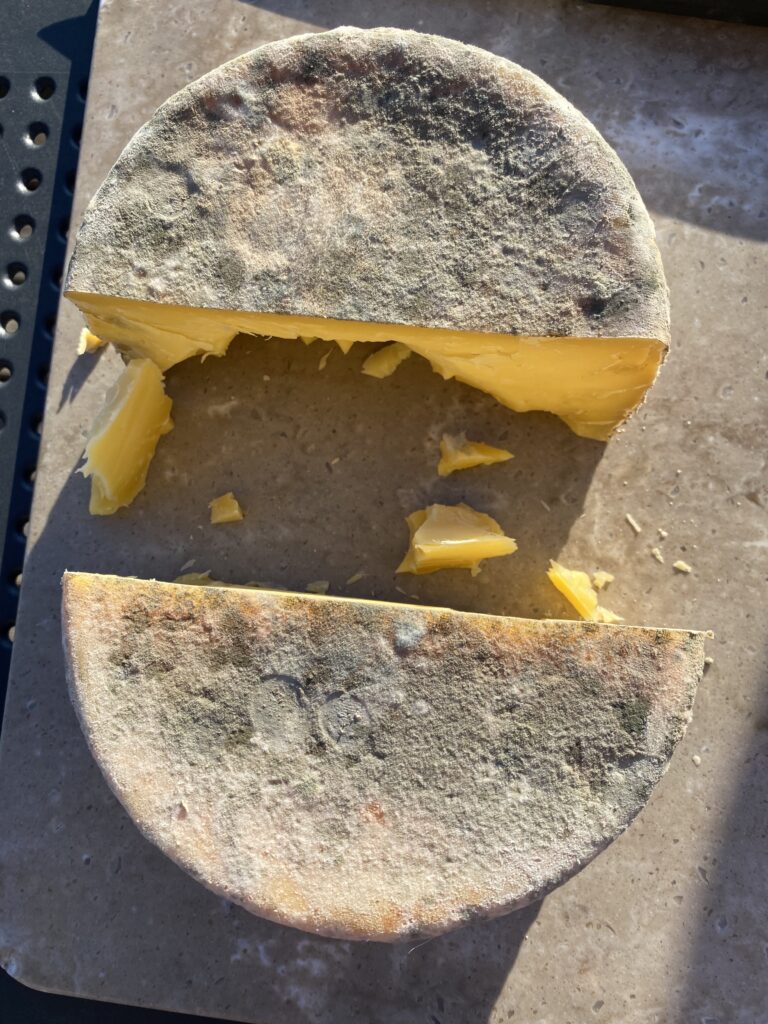
When naturally aging cheese, meaning allowing it to form its own rind, microorganism growth on the surface of the cheese is a normal part of aging. Depending on what type of cheese you are making, different molds and yeasts will grow and one of the funnest, albeit complex pieces of learning to make cheese, is learning to harness the power of mold and learn what is normal, and what is not.
Is mold safe?
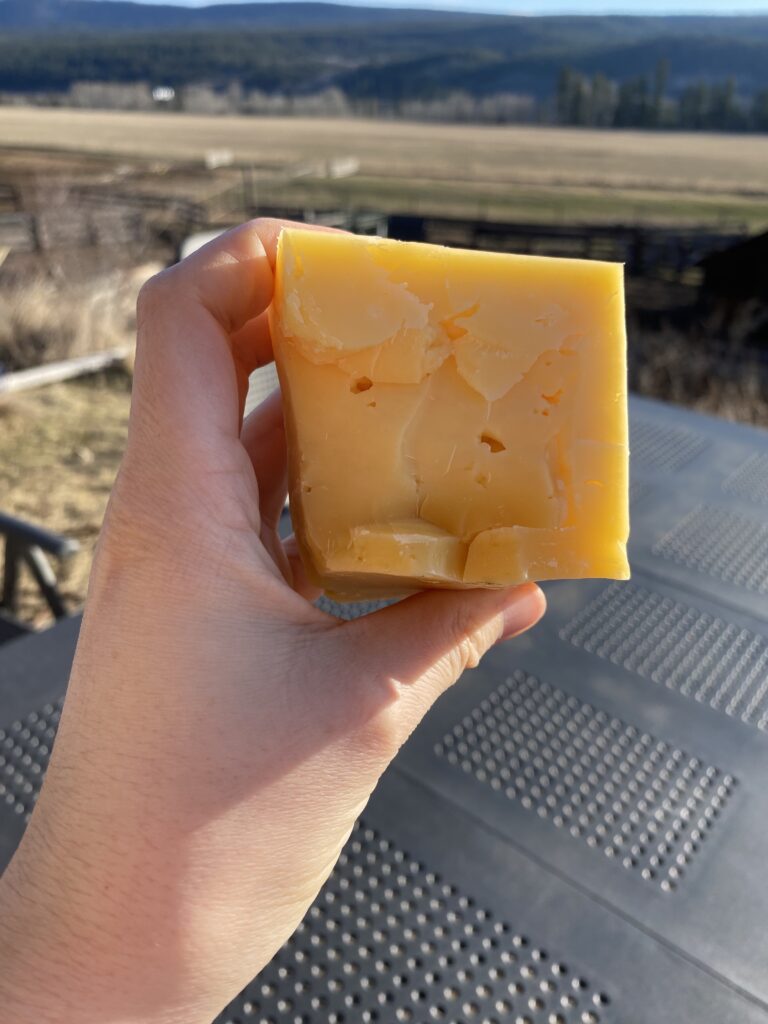
We all know that many molds are not safe. We don’t want mold to grow in our house, or on our bread, so why is it ok for it to grow on cheese? The answer is that it largely depends on the density of the cheese. Dense cheeses, such as parmesan, are dense enough that once they form a protective rind, molds have a very difficult time penetrating deep within the surface of the cheese. You can have a very colourful rind on a dense cheese, and experience no off flavours on the interior. On the other hand, soft cheeses, are much more permeable to mold, and developing off flavours from unwanted varieties. For this reason, the techniques we often use to keep mold off of our soft cheeses are different than our dense cheeses.
So to answer the question is mold safe? I really can’t tell you the answer to that, but I can tell you that most of the cheeses made over thousands of years have had some form of fungus on them. As a general rule, I don’t care what grows on my dense cheeses, but I do try to keep my soft cheeses controlled with varieties of molds that I am familiar with.
Molds are trying to tell you something
The cool thing about mold is that it is often telling us what is going on in the environment of our cheese. For example, if I see cat fur mold, I almost always know that the humidity is too high in my ripening area. The cat fur mold is a visual signal for me to change something for the betterment of my cheese.
One thing that has stuck in my brain since taking David Ashers live cheesemaking class is that you can’t necessarily tell if a mold is dangerous by its colour. It seems backwards then that I would give you a colour chart for diagnosing the cause of your mold, but it really is the easiest way to troubleshoot and start making changes. Though these examples in this chart are not hard and fast rules, they are suggestions for changes to make if you notice unfamiliar molds growing on your cheeses.
| Surface of your cheese | Notes | Cause | How to fix it | Prognosis for your cheese |
| White | A normal part of naturally aging cheeses, especially raw milk cheeses. White molds are actually yeasts, (usually geo cadmium) and they are important pieces of proper rind development. | – Proper temperature and humidity control | This is a normal part of aging all cheese. Flip it daily to promote even rind development If you notice the rind starting to separate from the cheese, reduce the humidity | Very good! |
| Blue/Green | Often a normal part of naturally aging dense cheese. Blue molds typically appear 2-3 weeks after beginning aging and grow overtop of white yeasts that have already formed on the surface of your cheese. The blues can be brushed to keep down, or left. Eventually they will die off as the succession molds appear. | Excessive moisture Too cool of temperature Cross Contamination Contaminated Aging Area Oversalting | Isolate this cheese from your other cheeses Allow it to grow if your cheese is 2-3 weeks old and has had a chance to develop a rind. You can brush it off as needed to keep the rind down. If you do not want this mold to grow, wash it off with a light salt/vinagar brine solution or brush it off. Sometimes you may see a green mold grow underneath your vacuum seal bag. Pull the cheese out, scrape the mold off and reseal. | If this mold starts to grow on your dense cheese before a proper rind has developed, or if grows on a soft cheese, expect off, musty flavours. |
| Pink | I am weary of pink molds on soft cheeses as some pink molds have been linked to infections. | High Humidity High Temperature Excessive Moisture Poor Air Circulation | Scrape or brush it off Reduce the humidity in your aging space. Ensure you are flipping your cheese frequently enough. | Continue to monitor for more. |
| Yellow | Excessive Moisture Overwashing | Reduce the humidity in your aging space. Scrape or brush it off Ensure you are flipping your cheese frequently enough. | ||
| Orange | An orange smear is a desirable feature in washed rind cheeses. It typically creates strong smelling (often described as feet) cheeses. This orange smear is caused by the presence of a bacteria known as b.linens that usually colonizes from your hands. | – washing or overwashing your cheese | embrace it! In the future reduce the amount you are washing your cheese. This typically is the case when you are trying to prevent all mold growth on your cheese by washing with a salt brine. | – It will be stinky, but probably delicious! |
| Black | Excessive Moisture Excessive Humidity Poor air circulation | Scrape or brush it off Reduce the humidity in your aging space. Ensure you are flipping your cheese frequently enough. | If it went too far, expect a bad taste. It may be ok for hard pressed cheeses but moist cheeses can easily be penetrated with small amounts. Black mold can be harmful so use good judgement. | |
| Hairy | Hairy mold, often refereed to as cat fur mold or mucor is usually caused by excessive humidity. | Improper salting, leading to excessive moisture Excessive Humidity Not flipping your cheese enough Lack of air flow Contaminated aging area, or brine. | Lower the humidity in your ripening box Flip your cheese more often Isolate the cheese Brush it off carefully away from your other cheeses, the spores spread easily Adjust the salt in your cheese if needed. Change your brine. Clean your aging area. | Depending on the severity and the denseness of your cheese, a slight mouldy taste may be present. Some people eat the cheese with the cat fur mold. |
Common methods for dealing with mold growth
- Brush– Hard rind cheeses such as parmesans or alpine cheeses can be brushed to keep mold growth in check. I like to use a tooth brush for this technique, as it helps me isolate any cracks or crevices in the rind but you can use any dry bristled brush. Cheeses can be brushed anywhere from daily to weekly after the first month and as the cheese ages, brushing times can become less frequent owing to the stabilization of the rind. Common sense cheesemaking tells us that this is an excellent method to use when trying to rid your hard cheese rind of mold.
- Wash– Cheeses can be washed with everything from wine, to beer, to salt brines inoculated with the same bacteria that grows between your toes! Yes you read that right.. ever wonder why cheese sometimes smells like feet? B. linens is a bacteria that is found many places namely cheesemakers hands, and the rinds of the cheeses they wash. In modern days we inoculate a brine with this bacteria, but in more natural circumstances, the very act of washing our cheese with our hands, is the act that encourages this microorganism to form a telltale orange smear on the surface of the cheese. Washed rind cheeses can range from moist and creamy to hard and crumbly and their orange hued exteriors can be caused by a myriad of different salt loving bacterias . Washed rind cheeses are usually washed daily for a time, and less frequently as the rind stabilizes. Common sense tells us that washing our cheese with a light salt brine is a great technique to use when trying to regulate mold growth on the surface of your cheeses.
- Vinegar/Salt wash- For softer cheeses such as the provolone, keeping unwanted molds off your cheese is important for flavour development. In these cases you may be asked to spot wash any mold growth with a vinegar/salt solution. To make a light vinegar and salt solution mix 1 tsp fine ground salt with 1/4 cup vinegar). Use this mixture as a spot wash to remove mold, rather than washing your entire cheese.
- Pat– Certain mold ripened cheeses such as brie, use mold ripening cultures that are added during the cheese make, or in some cases are already present within the milk, will come to the surface during aging. Penicillium cadidium and geotricium cadididium are two prime examples of surface yeasts that are desirable when making bloomy rind cheeses. During the aging of these cheeses, recipes will call for you to pat down the coats of these molds, regulating growth and helping promote proper rind development. When you flip bloomy rind cheeses, pat their rinds down.
- Scrape- In some cases you may need to scrape or even cut mold off of your cheese. This is especially true if you have extremely neglected cheeses that have developed mold growth that is beyond brushing or washing. Hard cheeses have interiors that can withstand even the most extensive mold growth without effecting the centres of the cheese. It is always best if you can control mold growth rather than completely remove it by cutting, but if you are feeling uncomfortable with the level of mold growth you have growing on your hard cheese, try scraping and cutting before you move on to tossing. Some cheeses are made by doing absolutely nothing with the rind other than maintaining humidity and temperature. The rinds of these cheeses eventually stabilize and though the cheeses these methods make, are an acquired taste, many still love them.
- Flip- Flipping cheese promotes even aging. Even a vacuum sealed cheese needs to be flipped occasionally. Cheeses that develop “eyes” during aging such as Emmental will require more flipping to promote even eyes. These cheeses rely on carbon dioxide producing bacterias called propionic bacterias to ferment in the cheese. When these cheeses are not flipped regularly, you will notice more eyes on one side. This is a visual sign of uneven aging, yet in all cheeses there are signs that we can not see. This is why when at all possible, flip your cheese at least weekly or according to your recipe directions.
- Wrap- Some cheeses will require you to wrap them after a certain amount of natural aging. In most cases you will be wrapping them in a cheese ripening paper that will allow them to continue aging with some air flow.
- Rub with oil- Some cheeses will ask for the rinds to be rubbed in oil after a certain period of time. As rinds age, they become harder and this oil rubbing helps to keep them soft and supple.
- Fluctuate humidity and temperature– Some cheese will require different temperatures and humidity as they age. You may start out at one temperature but be asked to increase to another. These different temperatures and humidity help to encourage or discourage certain fungus or bacteria.