
By Rachel Hester
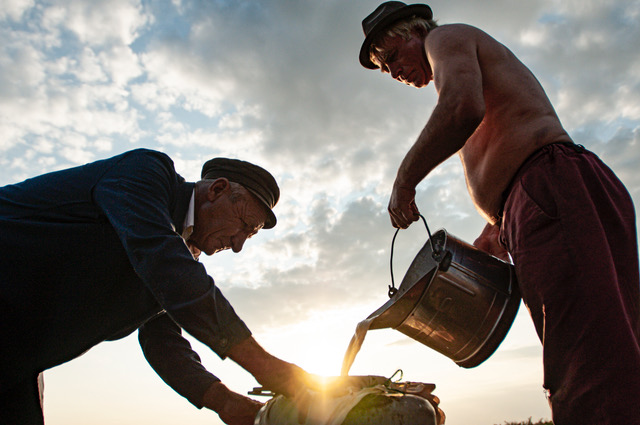
My introduction to animal husbandry was in Eastern Europe. In the small village in Romania where I stayed, humans and animals had been interdependently thriving for thousands of years. Granted, politics didn’t always cooperate. But despite that, the people, plants and animals had stubbornly developed a symbiotic relationship that has withstood the test of time.
In the little foothills of the Carpathian Mountains where my village family tended their fields, they didn’t have time to worry about what the government had most recently decided was the safest way to raise their livestock, nor did they bother much with the current insistence on NPK. They simply did things as closely to how their ancestors had always done them as they could.
It was here that I was first introduced to revolutionary food concepts like raw milk, cooking in lard, and sheep cheese. These foods were revolutionary for me to even consider tasting. Growing up in a lower- middle-class American household, it was drilled into me at a young age that germs are bad, fat is bad, too much sugar is bad but some is fine, meat must be cooked to practically charcoal, and there were only a few animals from whom we harvested food. Milk came from black and white cows, pigs were pink, and sheep were for hobbyists and fiber artists.
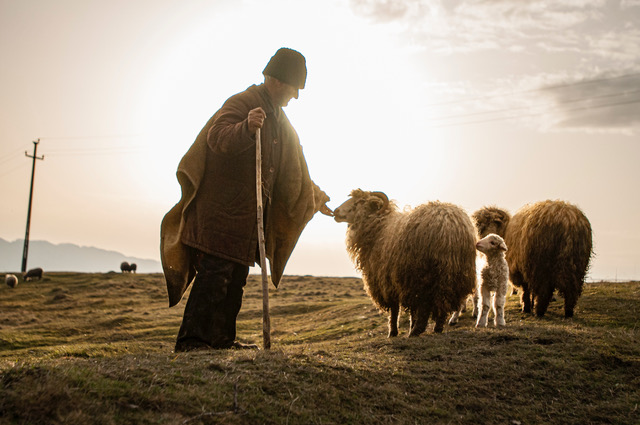
In the villages in Romania, however, people ate pig backfat roasted over an open fire and ate it between bread. They drank raw milk to wash down handmade doughnuts fried in lard. Sheep cheese, one of the higher fat dairy products available, was consumed almost daily. It was eaten by itself, on bread with salami, as a garnish on their potato pancakes, and as the focus of many desert pastries.
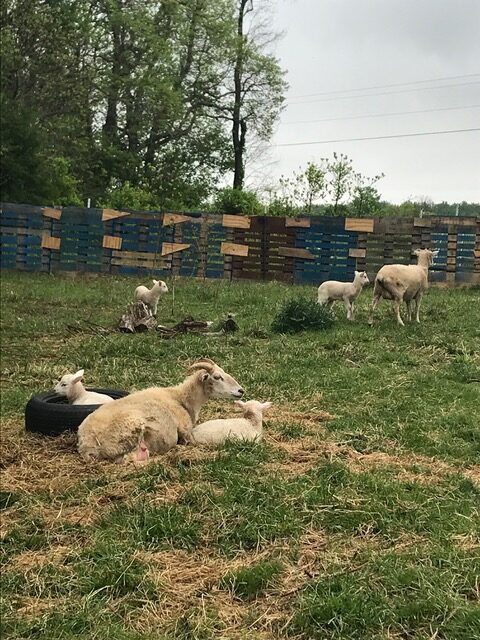
When my husband and I both experienced a health crisis in our mid-20’s, we began a slow but steady journey back into what I now happily refer to as “Good Peasant thriving.” I tapped into the knowledge that my time in Eastern Europe had opened my eyes to and started exploring further. We dove into learning about our digestive system, traditional foods, and alternative healing. Through the course of this journey, we bought a homestead and decided to raise our own dairy. Through a series of events that included attempting to buy goats but Covid lockdowns intervening, we brought home our first two sheep in May of 2020. This purchase being fueled by a combination of a longterm dream coming to fruition and mild panic spurred on by food shortages, the breed of sheep we brought home was not a dairy breed, but rather one whose classification is now considered a meat breed; the Border Leicester.
In doing research on the Border Leicester sheep, I learned that traditionally they had been raised for milk, meat and wool; a tri- purpose animal as it were. Once we brought the sheep home, we decided we liked sheep so much we brought home a few more. This being during more lockdowns, we bought what was available and ended up with a hodgepodge flock. We had two dairy crossbreeds of the ‘proper’ genetics for milking, a few Gulf Coast Natives – an endangered heritage breed – and the Border Leicesters. Later we added some Tunis-East Friesan crosses.
Since returning from Romania, I had sought to replicate the recipes I learned, with varying success. Nothing could replace the cheese made specifically from sheep’s milk. This was my chance to finally explore those magical cheeses like Telemea, Kashkaval, and Brunza. But first, I had to learn how to raise sheep that were healthy enough to produce prolific milk.
Since our journey into raising our own food was inspired by our own need for deep healing from chronic illnesses, we had the mindset of both sustainability and as organic as we could make it. We didn’t want to use chemicals or spend thousands of dollars in inputs. I have to be as soy and corn free as possible, and so we couldn’t feed our ewes the conventional mix of stanchion feed. Our health knowledge is heavily influenced by the Weston Price Foundation, and so we wanted our ruminants to be as grass-fed as they possibly could be. So we started out with Rotational Grazing, avoiding chemicals, and avoiding much purchased feed.
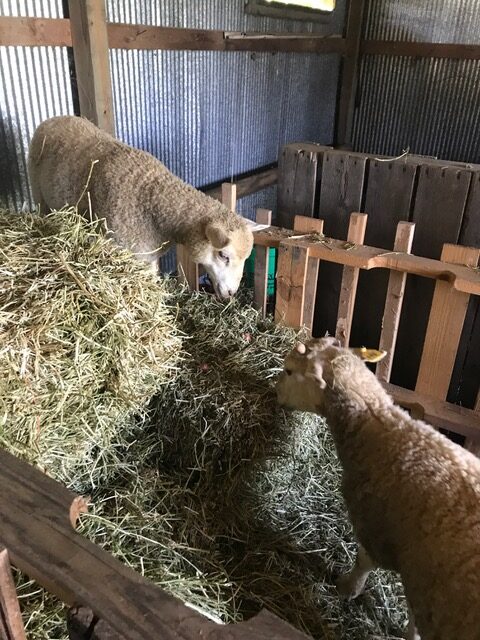
Our sheep thrived … for about a year. Once they used up their reserves from their previous homes and saturated the land with their pathogens, they started developing some serious health issues. Summers turned into an all out war against sheep parasites. Harvesting milk and cheesemaking took a backseat to fighting to keep my sheep alive while still operating in a “regenerative agriculture” model… i.e. minimal chemical inputs.
I learned from Pat Coleby’s Natural Sheep Care book how to identify nutritional deficiencies and realized we really needed to add in some grains that had certain nutrients like protein and B-vitamins – such as barley and oats. We changed our mineral mix from whatever our local feed store had to one that is higher quality and whose percentages of minerals more closely match what our soil lacks. This involved some soil testing, which revealed we had no topsoil and therefore our pastures were lacking a lot of nutrients. We realized that on our foreclosed property, animal husbandry was not going to be a ‘plug and play’ regenerative agricultural set up.
I thought back to my Romanian friends and felt baffled. They didn’t have to put this much thought and worry into feed ratios, mineral mixes, soil types, etc. How were they able to get away with it?
While interviewing a Romanian shepherd for my book, it hit me like a thunderclap. He wasn’t rotationally grazing his flocks over the same acreage over and over in the same year, years at a time. He gathered his flocks and became nomadic. Milk yields in the valleys where the peasants kept their sheep in paddocks were half of the yields when the shepherd rounded the village sheep up and took them into the mountains. The village paddocks then received about a six month rest period.
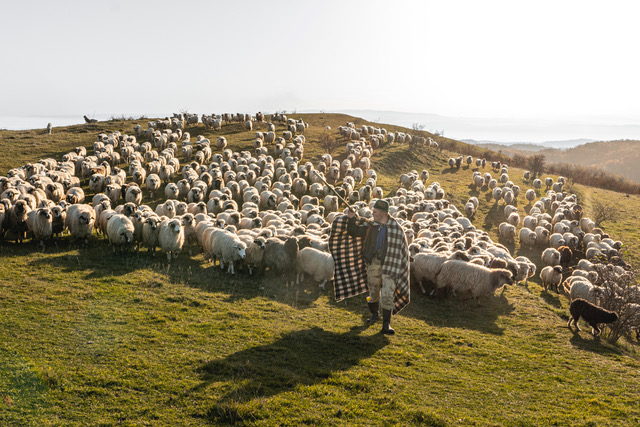
The mountain fields are some of the most diverse pastures in the world, and full of herbs the sheep can self medicate with. Rarely do the shepherds travel back over the pastures they have already been over – and in fact, in France the nomadic shepherds have an intricate network of who uses what pastures when, so that the sheep are not cross-contaminating them for other flocks. Furthermore, many shepherds in Europe didn’t have the qualms I felt about feeding their sheep occasional whole grains. They did not feed flours or pellets. The importance being that a whole grain requires a longer digestion time, whereas a flour or pellet made from flour digests too quickly and can cause rumen acidification.
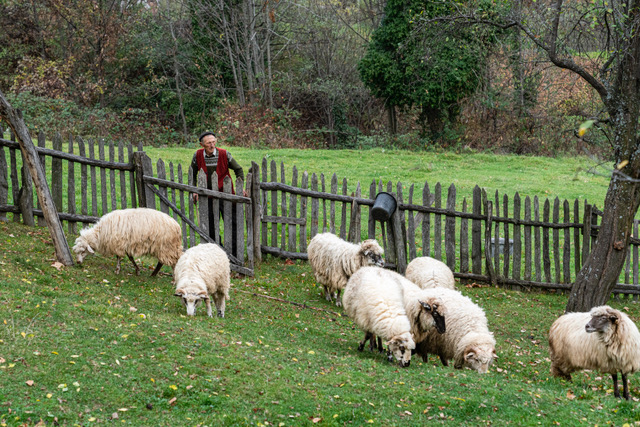
I realized that the peasant shepherds do in fact put a great deal of thought and strategy into their animal husbandry. It’s different simply by virtue of the fact that they have passed their methods down generationally, and haven’t had to reinvent the wheel with each new shepherding generation. On a small farm in rural America, is it possible to replicate any of the traditional methods I saw while overseas?
There are points that we can try to replicate on a small scale, and others where we examine the ‘why’ behind it and see how to implement the ‘why’ not the ‘how’ on our properties.
First, dairy sheep need a diverse diet. We decided it was time for us to learn how to reseed our pastures and increase the diversity in our pastures for the milking ewes. We have reseeded with both pasture forages recommended for our area, as well as starting to plant herbs such as comfrey, oregano, and yarrow. Mint is beneficial but also has properties that will dry up milk supplies, so we keep it to a minimum. We stopped trying to use the ewes for both soil improvement and dairy. The ewes go on the rich lush pasture and the rams and wethers get the honor of improving soil on the less fertile ground.
Secondly, we decided that we would emphasize the hardier genes in our flock and not worry so much about the ‘proper’ breeds for dairy. In the United States, we only have access to about three dairy breeds, and these are still in breeding up programs. At some point we may revisit improving our milky genetics, but while we are focusing on pasture renovation we decided to emphasize hardier, heritage genes in exchange for lower milk yield and shorter lactation times. We still get a good milk harvest, it’s just not as much as it would be if we owned high percentage Lacaune, Awassi or East Friesian sheep.
We realized we couldn’t be as grain free as our Weston Price ideals dictated until our pastures were drastically improved. So we embraced a ‘stanchion mix,’ but focused on feed that honored the ewe’s ruminant nature by choosing slow fermenting grains high in nutrient density. At some point we will add soaking the grains before feeding them as well, and perhaps sprouting – but those methods take some infrastructure and planning. Free range chickens are NOT conducive to harvesting these grains either, so we have to change our chicken management system as well.
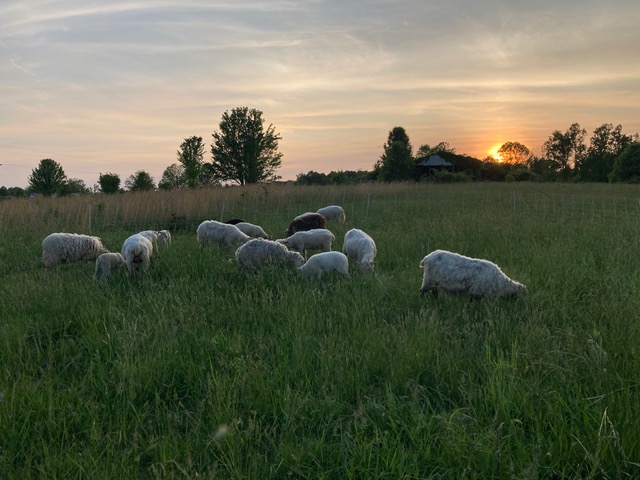
We also have begun doing something a bit controversial amongst regenerative agricultural shepherds. We pull our flocks off the pastures in the high summer, when parasites are at their highest. They go on dry-lots and are fed good quality hay. Eventually we hope that the pastures will have nutrient-dense enough forage to where this won’t be necessary. But currently, until the sheep are able to harvest enough nutrition to remain strong enough to withstand parasite attacks, we put them on hay. Barber Pole worms cannot live on dried hay. This is usually only for a month in the summer, when the ewes are at their peak lactation and have used up all their reserves and so are at their most vulnerable.
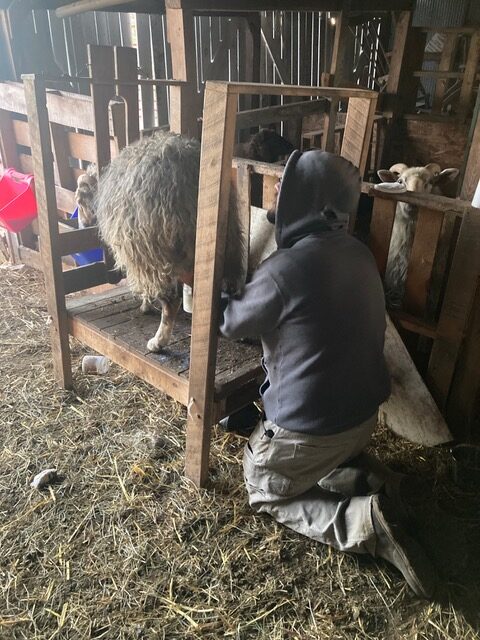
We have and will use chemical wormers in our flock when it is necessary to save a sheep’s life. The trouble is that typically when a ewe reaches the point in a parasite infestation where she requires chemicals, the chemicals themselves can be dangerous. When all those intestinal parasites die suddenly from chemical poisoning, they leave wounds in the intestinal wall and the ewe can still die from anemia from internal bleeding. Since learning this, whenever we have to use chemical wormers, we always drench our ewe with 1 tsp cayenne pepper in a Tablespoon of olive oil and a bit of apple cider vinegar. The combination is rather horrific on the nose and the ewes don’t like it. The cayenne has cauterization agents in it that will stop the internal bleeding. We drench her with this combo for at least a week after the chemical application, and do not keep the milk we harvest from her for personal consumption. In fact we’ll probably stop harvesting milk from her altogether if we have to use chemicals and will let the lamb have all of it after that until she dries off.
Milking sheep is an out of the box venture in North America agriculture. Raising dairy sheep in an organic, regenerative farming method is out of the box for the out of the box folks. Raising dairy sheep regeneratively while also putting them in confinement during the summer and feeding them grains… I think we have left boxes behind and are now just floating around in non-conformism altogether.
We do own a Jersey cow as well, and there are times I sigh and stare at my cow a little wistfully as she seems so much simpler at times when it comes to management. Her parasite loads are nothing compared to the sheep, and she chomps on our sub-par fescue fields and thrives. Granted, her milk volume is lower than her genetic potential as well due to our poor pastures. But the thought processes to keep her alive are non-existent when compared to the sheep.
But the sheep milk has such unique health properties to it and has been an imperative dynamic in our healing journey. Studies are being done in overseas universities that show sheep milk has healing properties that other milks, say from cows and goats, don’t have. The general nutritional properties are similar, but the vastly higher amounts in sheep milk are what make the difference. Sheep fats and proteins are also differently shaped, thus affecting the digestibility. We have certainly found this to be true in our own experience. We have been part of herdshares for cow and goat milk and never experienced the accelerated healing we discovered once switching to sheep’s milk and cheese.
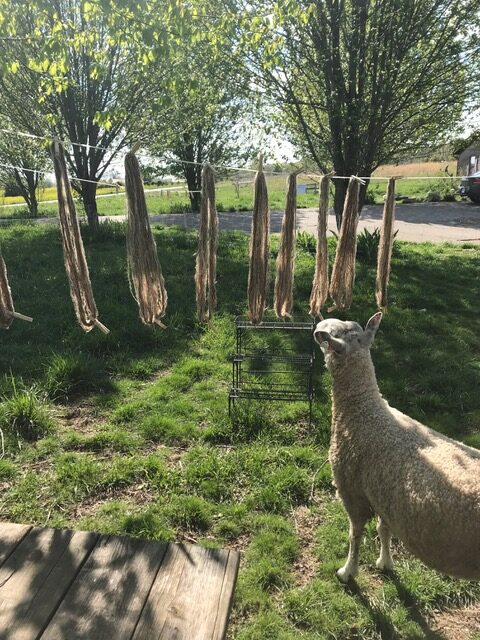
The sheep themselves give a special kind of joy we haven’t found with other animals. There is nothing quite like seeing a flock of sheep happily grazing and ruminating, while growing their amazing wool.
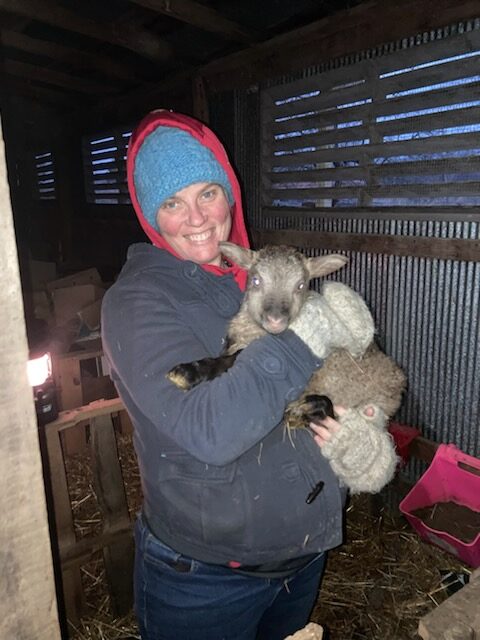
As my Romanian shepherd friend says, “It takes a special kind of person to want to raise sheep. It is not easy, it is in fact quite hard. It is not for the faint of heart. You have to have a calling to be a shepherd to live this life.” We have definitely found this to be true. There are folks who have told me they have no interest or desire for sheep, and that’s fine. There are folks who have told me they tried sheep and didn’t like them, and that’s fine too. But the vast majority of folks who talk to me state that they always have wondered if they might raise some sheep, and they are grateful that I have pioneered the way to show them how.
So if you are interested in adding some dairy sheep to your cheesemaking enterprise, I applaud you! But please know that your management systems will have to start adopting out-of-the-box methods and you’ll become quite intimate with a lot more dynamics than just sheep. You’ll become a soil expert, chemist, hobby veterinarian, probably a fiber artist of some kind, food advocate, and all around nonconventional. But the cheese makes it all worth it.
One Response