
By Rachel Hester
When I first started milking sheep in 2020, there were very few people that I could find who were doing so. There was one Facebook group where we gathered and compared notes, but no breed registries available in the United States for dairy specific breeds. One certainly couldn’t find folks at the Homestead Conventions who were selling sheep milk products or talking about how to raise dairy sheep.
Now, five years later, dairy sheep are on the rise! Whether that is due to the increase in small-acre homesteads who can’t keep a cow and want a different option than goats due to temperament, or food intolerances, or simply a deeply buried desire to raise sheep and needing a practical use for the products they produce, sheep are happily being rediscovered.

I say rediscovered, because sheep may have been the first animal domesticated for dairy purposes. When pottery shards with milk residue were retested, it was determined that the residue came from ovine sources. Archaeologists have found large burial grounds of lamb bones that seem to be older than burial grounds of goat kid or calf bones (the burial grounds indicating a dairy operation, as ancient cheesemakers harvested many of the new animals for rennet production).
Milking Sheep
Milking sheep is still the preferred animal in many countries considered third world over goats or cows due to the ease of husbandry compared to goats and the financial affordability compared to cows. Yet in the developed world, sheep aren’t usually as popular. Different countries have different reasons for this. In the United States, sheep and cattle became competitors for prime rangeland during Western Expansion and due to some excellent Public Relations smear campaigns and cloak and dagger politics, sheep fell away from popularity in the 1800’s along with their nutritious milk. Even today it is interesting to observe how the culture suffers from the propaganda against sheep, with comments like, ‘Everyone knows sheep are stupid,’ etc.
In the United Kingdom, sheep milk was the everyday farmer and small crofter’s preferred dairy beverage until the Industrial Revolution. At that time the factory owners realized they needed a familiar protein source for their workers that could be made and transported in bulk. Sheep produce the smallest volume of milk for the shortest period when compared to cows and goats. So the higher classes in the United Kingdom began a smear campaign against sheep milk, calling it uneconomical, comparing it to the patriotic cow who lovingly gave gallons for her countrymen to faithfully work in the factories. A few stubborn shepherds hung onto their beloved dairy flocks, but as a whole the country moved away from sheep milk and embraced cow milk. This might be why we see so many allergies today to cow milk, even when it is organic, humanely raised and A2A2. Some of our bio-individuality and ancestral foods were historically of an ovine persuasion instead of bovine.
When I began milking sheep in 2020, I was quite shocked to receive well intentioned warnings against milking sheep. Even once I was established in milking sheep, folks had the attitude that if I was successful and wanted to take it seriously as a business I would graduate to more ‘proper’ dairy animals. When we bought our milk cow the assumption was we didn’t ‘need’ sheep anymore. While we have healed my gut enough to where I can enjoy my jersey milk products without gastrointestinal distress, I will always keep dairy sheep on my property due to the intense nutritional powerhouse their milk provides. I come from Prussian and Bavarian ancestry, and the region my maiden name comes from in Poland creates one of the more famous sheep’s milk available on the market. Sheep are just in my blood. I can eat and enjoy cow dairy products now, but I really thrive in my health when I’m consuming sheep milk products.
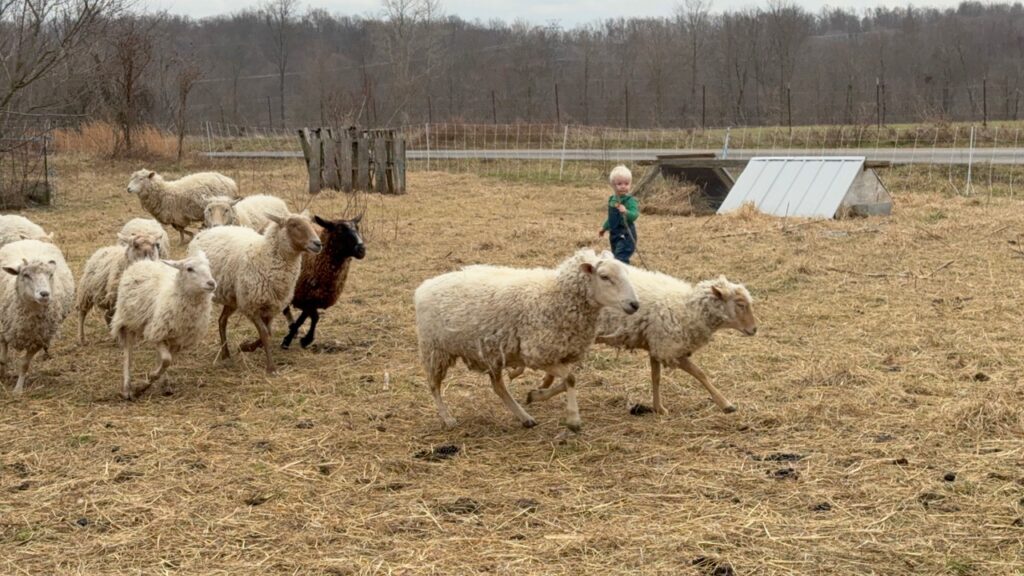
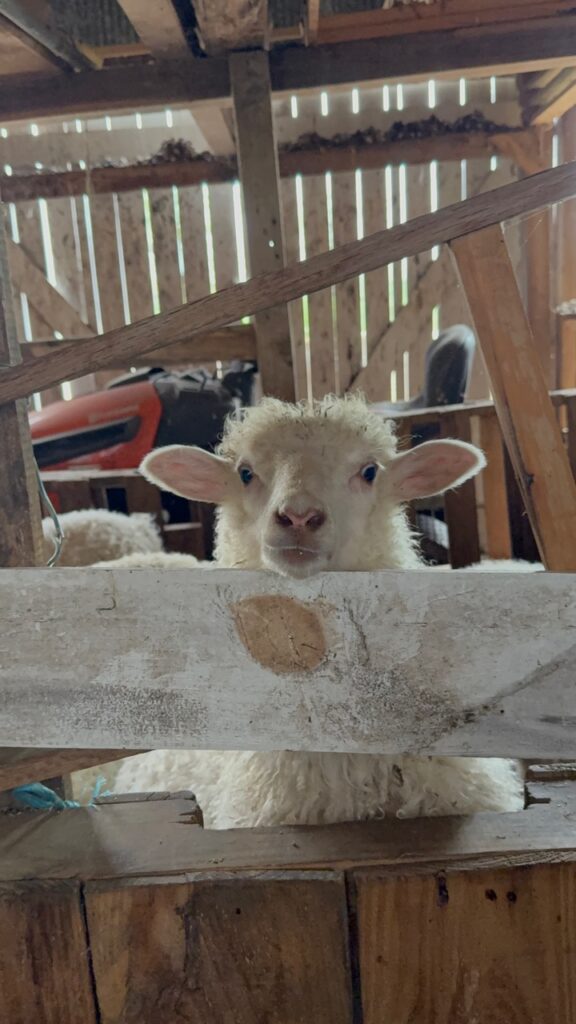
You may be curious as to what is so different about sheep milk and so was I. Unfortunately the United States hasn’t felt it necessary to conduct many studies on sheep milk – yet – but overseas it is being looked at for failure to thrive babies, lactose intolerant women, and people who generally are just ill at health.
More about the A2A2 Protein
The A2A2 milk protein has received quite a bit of press in the last few years as those with genetic predispositions find it easier to digest. Sheep milk is A2A2 no matter what breed of sheep you milk, whereas cows must undergo testing to see who carries the gene and who is A1. The A2 protein in sheep milk is slightly different than the cow A2 protein, in that it is smaller and smoother shaped. Smoother, smaller shaped proteins means easier digestion and faster absorption into the digestive tract. The fat is also smaller in sheep milk, and therefore more minerals pack around the fat globules making it higher in minerals than goat or cow milk. In animal husbandry this means that a flock of sheep ought always to have a high quality mineral freely at their disposal, but it also means that folks consuming sheep milk are getting a higher mineral supplementation in their own diet.
While sheep milk does contain the milk sugar lactose, it contains the smallest amount of lactose in tested milks after breast milk. Cow milk actually has one of the higher amounts of lactose, and folks who assumed they were lactose intolerant – but rather simply have sluggish digestion or leaky gut – can sometimes enjoy a glass of sheep’s milk with no issue. For those who truly do not possess the ability to make lactase – the enzyme responsible for digesting lactose – studies in Eastern Europe have shown that sheep milk fermented into kefir can consume it with no issues. The Mongolian people can attest to this phenomenon – as a people group none of them produce lactase but they culturally depend on a diet heavily laden with milk products. They can get away with this because they never consume the milk fresh and always ferment it, so that the probiotics digest the lactose for them.
Low lactose levels with high fat and special protein means that sheep milk moves very quickly through the digestive tract. This prohibits the unwelcome phenomenon some people experience when consuming dairy of flatulence or constipation. The milk is in and out of the intestines before it can ferment and produce gas.
While all sheep breeds express these unique nutritional components in their milk, different breeds of sheep will have nuances in their milk pertaining to fat content. High production dairy specific breeds such as East Fresian, Awassi, Lacaune, Assaf, or British Milk Sheep can produce anywhere from a liter to a gallon of milk per day. However this milk will be incredibly sweet due to the higher lactose and lower fat.

Historically, very few dairy shepherds milked dairy-specific breeds of sheep. Rather, they milked the local breed of ewes during the season in which they weaned their lambs, made cheese out of the harvested milk, and were content with it as a short-seasonal product. The daily harvest ranged from a pint to a liter and was much higher in fat and protein. In the United States we have limited access to dairy genetics and even the ones we can get are typically in a breeding up program and not full bloods. This means that most of us have no choice but to milk cross breeds or non-dairy breeds.
When we first began milking sheep I had a hodgepodge flock of Border Leicesters, Dairy crosses with East Friesian and Awassi genes, and Gulf Coast Native sheep – a landrace breed from the American South. The dairy ewes gave the most milk, with the Border Leicester a close second. The Gulf Coast Native gave barely a pint per day under great duress, and let me know each milking that she was a FERAL landrace breed who did not appreciate this kind of relationship with a human. The milk was hard won from her tiny udder and jellybean teats – but it was like drinking half and half. The overall harvest of my daily milking could yield a quart of cream per gallon of milk.
This year our Gulf Coast Native ram shot blanks and we sadly had no lambs or milk from them this year. I was quite shocked when I tried this spring’s milk to find it much sweeter and a little grassier than previous year’s milk. Sadly I can only eke out a pint of cream from a gallon of milk from the higher producing East Friesan crosses. So while the volume of milk is higher with the dairy crosses, the fat content is down. This is fine for cheesemaking but rather sad for my morning cup of tea and butter making.
When making butter with sheep’s milk, I have realized that there is a reason why cow butter is the preferred medium for that product. When compared to goat or cow butter, sheep butter has a much lower saturated fat content. It takes longer to churn into butter – at least two to three times the amount of time – and if left on the counter softens to the consistency of whipped cream. Sweet cream sheep butter tastes almost like a dessert. That can be appealing in certain dishes but was a little bit of a shock when I tried it on a piece of sourdough and was expecting a complimentary flavor to the savory bread. Historical shepherds coming to my educational aid once again, sheep cream was rarely skimmed off the milk and churned into butter like cow’s milk. Since the sheep milk is ‘naturally homogenized’ the cream doesn’t rise as fast as cow milk and can take a week or more. By that time the milk has begun to sour.
Historically butter was made by harvesting the spilled protein in the whey after cheesemaking. Cream was sometimes scraped off the top of fermented clabber after the milk was proactively fermented and beaten into a butter that more resembled a soft cheese spread. It is still a valuable product for the kitchen but very different from the butter I am used to from my Jersey cow. If you want to make pretty molded butter like Ma Ingalls, use your goat or cow butter. Sheep butter is better left in a bowl and scooped out.
Finally, sheep milk butter is pure white as sheep milk does not contain beta carotene like cow’s milk. It does contain the complete Vitamin A nutrient, unlike cows milk that typically only has beta carotene – an important precursor to Vitamin A but not the vitamin itself.
All that to say, knowing what you want your sheep milk for can determine what breed of sheep you decide to milk. Some folks just want a little milk for drinking and cheesemaking, and want the added benefit of high quality wool. In these cases it can be a good idea to investigate wooly breeds of sheep that are now classified as ‘meat breeds’ but have historically been milked. For those wanting to start a small business making cheese from sheep milk, dairy specific breeds may be a better option due to their larger daily harvest and longer lactation period.
Some potential shepherds are dismayed to discover that there are no hair breeds of dairy sheep. I find this baffling, because I think wool is one of the most wonderful products one can have. Shearing typically only occurs once a year and wool has so many lovely benefits for homesteads that I wrote an entire ebook on the subject. In a word, it just makes everything around it healthier and happier. Plants mulch with wool for example are hardier and more nutrient dense.
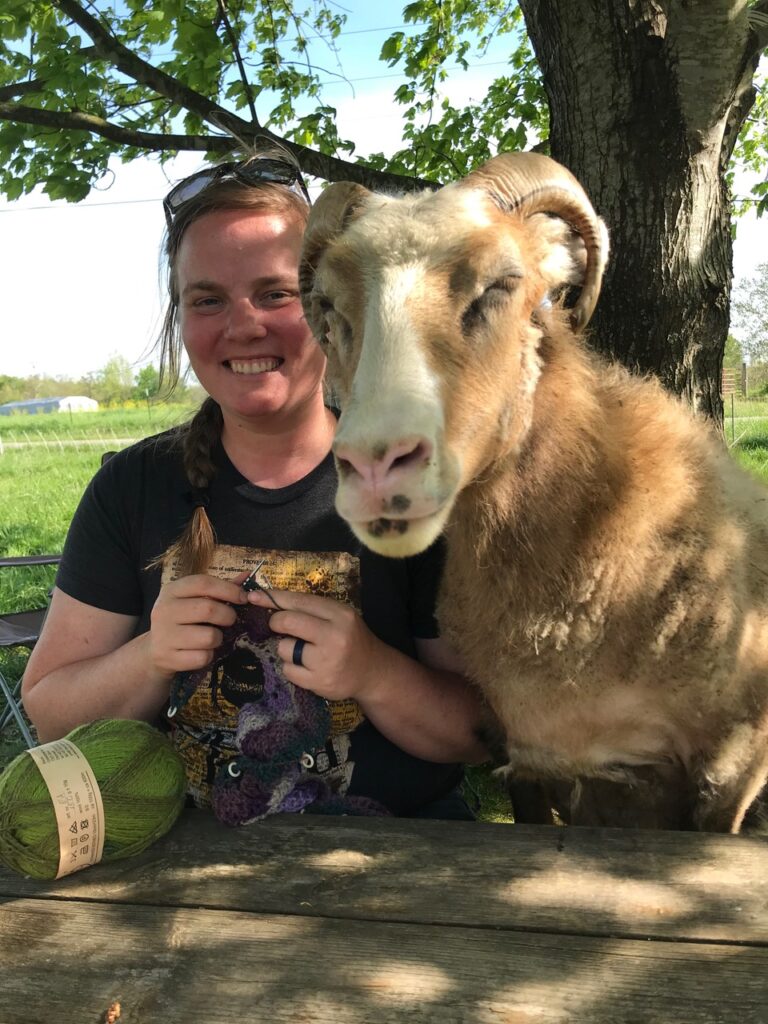
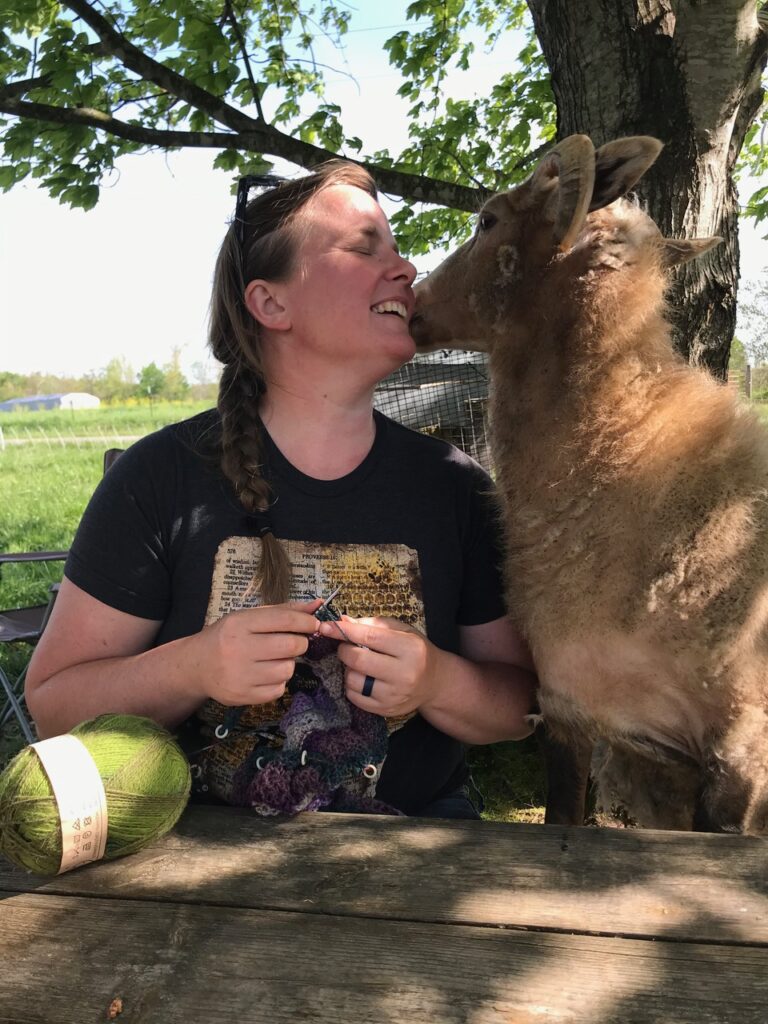
If one is bound and determined to forego the wool, it is quite possible to milk a hair breed of sheep. Just bear in mind the lactation time will be much shorter and the daily yield far smaller. Many people start their sheep milking journey by simply milking what they have access to and improving their dairy genetics down the road once they have fallen in love with the product. In Canada there are actually more dairy specific breeds available than in the United States – in fact the North America Dairy Sheep Association is importing East Friesian semen from Canada into the United States sometime this year to improve our own herds. In other countries in the world such as Spain or Romania there are heritage breeds not found in any other country that have historically been milked and are the localized dairy breed of sheep.
Whichever sheep you wish to milk, know that you are harvesting white gold. The nutritional powerhouse that is sheep milk has been recommended for thousands of years for healing chronic illness and other disorders in disciplines such as Ayurveda. Clearly I am passionate about sharing the joy that is sheep milk, and I hope you explore this delightful animal for dairy production as well.