
By Lacey Yates
Coccidiosis is species specific meaning every species has their own parasite. Goats cannot pass it to other livestock, and they cannot get it from other livestock. It often occurs in young goats and is caused by protozoan parasites. It mostly affects kids between three weeks and five months of age (although it can occur in poorly managed adults as well). Young animals are still developing their immune systems and are constantly nibbling/tasting (its passed via fecal to oral only) everything around them, and cocci lives everywhere in your barn. Coccidia in small numbers is really a non issue, but animals can also develop a cooci bloom when exposed to stress from weaning, weather changes, new environments, and poorly managed and dirty housing. In severe cases that are left untreated for too long, the animal can be affected for the rest of its life as the damage in the small intestine hinders the ability for them to absorb nutrients properly which leads to rough and dull coats, poor weight gain, weakness and eventually death.
Coccidia can be diagnosed by a vet through a fecal flotation test. However, experienced producers can often tell their kids are dealing with a cocci bloom based on the signs. There are many treatments options, and if treated quickly, the kid will make a full recovery quickly and not be affected long term. My goal is to participate in prevention to limit any blooms at all. Even if you haven’t dealt with it yet, you will eventually.
Treatment generally includes sulfa drugs such as sulfadimethoxine (like Albon, but your vet can help you decide which treatment options are best). This is usually given for 5 days with a higher dose given on the first day. I would not recommend Corid, as I personally think there are better alternatives. IF you do use Corid, you MUST give B1 vitamin injections after Corid treatment or you could potentially deal with deficiencies that cause problems as well. Kids should always have access to clean and fresh water, but if they are dealing with a bloom, its a good idea to give electrolytes to prevent dehydration.
PREVENTION is key here. I would rather prevent this problem then treat it. Begin with good management practices first. Preventing cocci begins with keeping pens clean and dry, making sure goats aren’t eating where they are pooping (do not feed your goats on the ground, and kids crawling in feeders is an absolute red flag), and reduce stress. Next, it’s often a good choice to add a Coccidia Prevention medication. This needs to be given on schedule to be effective. I prefer giving Toltrazuril orally every three weeks beginning at three weeks of age and continuing until 5-6 months. Some producers are giving Calf Bac which is dosed and fed through daily (this works for bottled kids). Albon and DiMethox are also used in prevention. I’ll note here that most Coccidia medications are used for both treatment and prevention, but the frequency and dosages are different.
Coccidiosis is a common but very treatable and manageable. Fast treatment is effective, but prevention will protect and insure the proper growth and health of your goat kids.
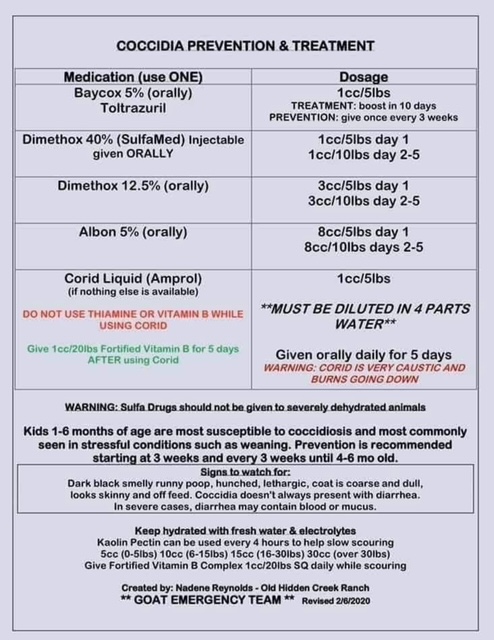
This handy chart was created by Goat Emergency Team and is a handy visual to print and refer to.