
By Lacey Yates
Breeding season is here! For many of us, it’s one of the most exciting times of the year — a season full of possibilities for improving our herds. Whether you’re planning to use bucks, artificial insemination (AI), lap AI, or embryo transfer, the goal is the same: healthy pregnancies that lead to strong, productive kids.
But before any of those routes can be successful, there’s one key factor that must come first: your doe must be in heat.
Does naturally cycle every 18–21 days during breeding season, and many herds are managed simply by watching for heat signs and breeding when they appear. This is straightforward and works well when bucks are on the property and cycles are easy to detect.
AI can also be performed on natural heats, though timing is more critical since the window for optimal conception is short, and AI takes place much later during the heat cycle.
However, there are times when you may want more control. For example:
- You’re using AI and need your does to cycle on a predictable schedule.
- You want multiple does bred at the same time to make kidding more efficient.
- You’re working with embryo transfer, which requires strict synchronization between donor and recipient does.
- You need to line up breeding dates with show schedules, milk testing, or personal time constraints.
- Or, it’s a “weird year” and your does just aren’t coming in on their own leaving you with the possibility of extremely late-in-the-season kiddings
- You have a problem for that is short cycling
This is where heat synchronization protocols come in.
Synchronization (“syncing”) is the practice of bringing a doe into heat on a schedule using hormonal or device-based protocols. The goal is to control the timing of ovulation so you know exactly when to breed or inseminate.

Pictured above are CIDRS, applicator and PG600. Many doses come in PG600, and it must be used right away once mixing. However, buy extra small syringes and needles, draw up the entire bottles contents in the single dosages needed and any that you aren’t using immediately may be frozen for later use in the season or next year. SEK Genetics (online) supplies CIDRS for small producers in small handy packs of 1,2,3 or more!
Some common tools and methods include:
- CIDRs (Controlled Internal Drug Release devices): Inserted vaginally, they release progesterone to control the cycle.
- Hormone injections: Such as prostaglandins, to regress the corpus luteum and trigger heat.
- Combination protocols: Pairing CIDRs with hormones for a tighter, more reliable window.
Each method has its pros and cons, and the right choice depends on your herd goals, resources, and comfort level with handling reproductive drugs.
A quick note on safety: Women handling reproductive hormones and CIDRs should exercise caution. These products can be absorbed through the skin and may interfere with human reproductive cycles or pregnancy. Always wear disposable gloves when inserting or removing CIDRs or administering hormones, and wash hands thoroughly afterward. If you are pregnant, nursing, or trying to conceive, it is best to avoid direct contact with these products altogether and delegate the task to someone else
Benefits of Synchronization
- Predictability: You know exactly when to schedule AI or ET procedures.
- Efficiency: Multiple does can be bred at once, making kidding season more manageable.
- Genetic progress: Access to elite genetics through AI or embryos is much more effective when heat cycles are controlled.
- Labor planning: Syncing helps balance farm tasks, especially for smaller operations that juggle many responsibilities.
Synchronization isn’t necessary for every herd. It adds expense, requires planning, and often needs veterinary involvement for prescriptions and oversight. For many herds, natural heats and live cover are still the simplest and most economical route.
But for breeders looking to maximize genetic potential, streamline kidding, or take advantage of advanced reproductive technologies, syncing is a valuable tool worth considering.
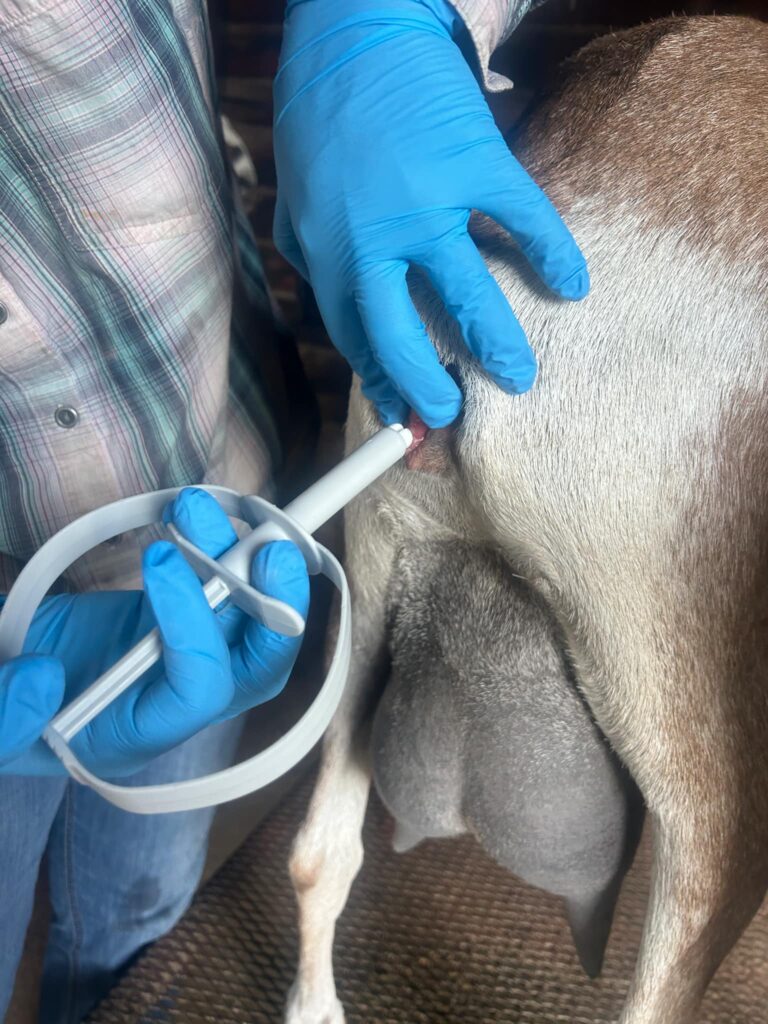
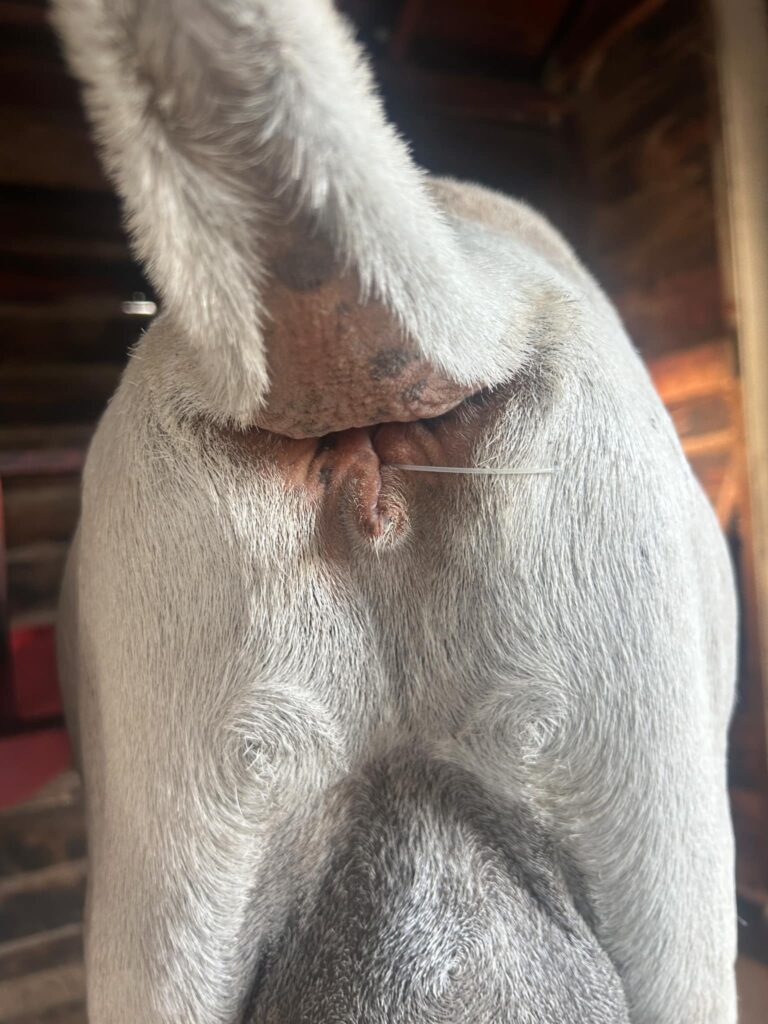
Pictured above is an CIDR being inserted, followed by what it looks like post insertion. Check often that the little plastic string is visible. Some animals can be a little too curious and pull their herd mates CIDRS out.
Whether you’re breeding on natural heats or exploring synchronization protocols, the most important thing is choosing the method that works best for your herd and your goals. Breeding season is a time of big decisions and even bigger opportunities — and with careful planning, it can set the stage for one of your best years yet.
Below is a simple protocol that I’ve used successfully in my herd for the past few years. It has consistently brought does into heat, and I’ve achieved conceptions using both live breeding and AI with it. Remember, a good relationship with your veterinarian is important, and I urge you to discuss any reproductive work with them before implementing protocols in your own herd. That said, the drugs and devices listed below did not require a veterinary prescription here in the U.S.
Simple Protocol:
Day1: Insert CIDRS (7:00AM)
Day 8: Pull CIDRS (7:00AM)
Administer 1.5 CC PG600 at the time of pulling CIDR
Day 10: Expect heats (7:00AM)
Remember, if you are AI’ing, timing is everything. Every breed is a little different with that timing as well. I raise Nubians and when AI’ing I personally have the best results waiting about 60-64 hrs post CIDR pull prior to AI’ing. Live cover as soon as you see heats
Video is in fast motion of a CIDR being inserted. This protocol ended with the doe being AI’d and producing healthy quads