
By Lacey Yates
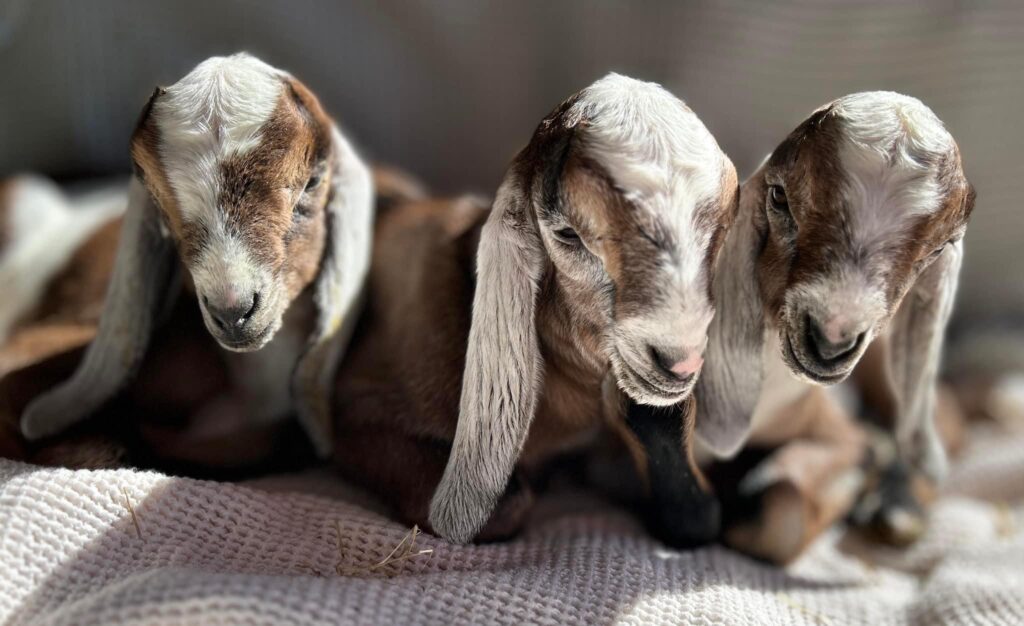
It’s only breeding season here at Raising Arrows, but I’m already anticipating the kidding season. There’s so much to look forward to with a new kid crop. While there are different ways to “raise” healthy goat kids, I choose a hybrid approach and aim to stay flexible. In a previous post I wrote for The Milkmaid Society, “Raising Healthy Goat Kids”, I touch on my preferred choice of dam raising kids. I wanted to expand on this particular subject, why I choose it, and what it really looks like for my herd.
Milk has always been a top priority for me. I think that’s a biggie for most of us with dairy goats. For me it started with my own child needing it, and to this day it revolves around customers needing milk. I even have a staggered breeding season ensuring I have milk year round.
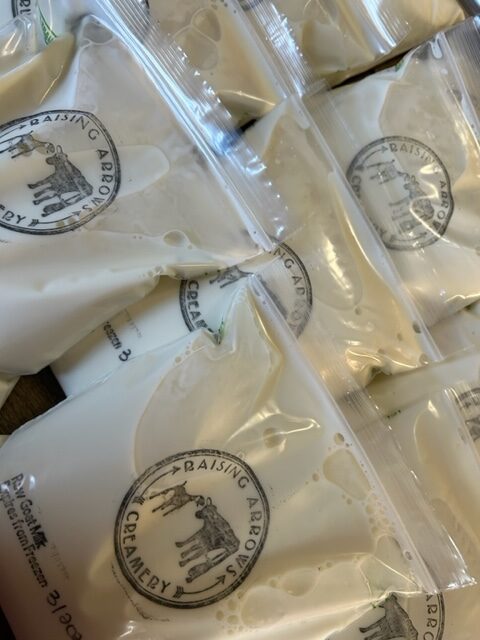
While kids are a necessity and are also the future of your herd, they can be managed so you get plenty of milk at the same time the kids remain nursing and growing. I like my kids (dam raised or bottle fed) to be on milk for at least 6 months. In my experience, this sets them up for faster growth and healthier lives. So how does one raise healthy kids on milk for an extended amount of time while still receiving plenty of milk for their families?
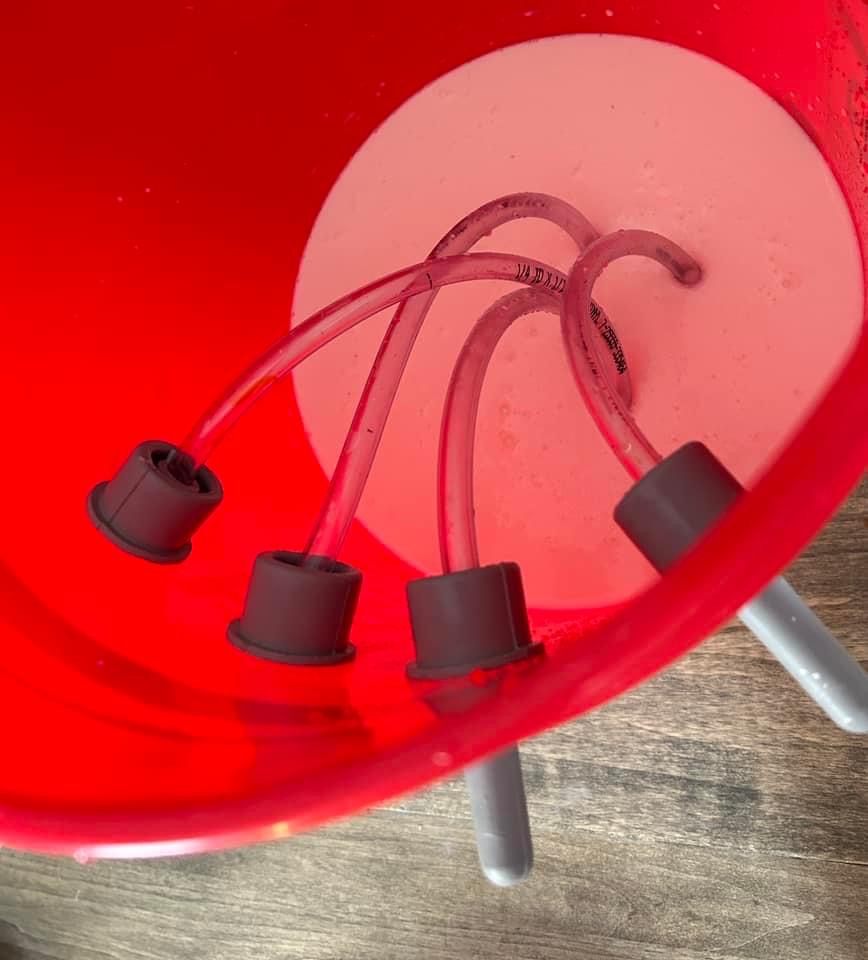
My preferred method is a hybrid approach. Starting from the birth itself, if the dam has anything more than twins, I will pull them to exclusively feed on a lambar. (This is a bucket with nipples fitted in the side, and rubber tubes that act like straws inside the bucket.)
While my does can raise more than two, it can be hard and draining on their bodies and more importantly the mammary system. I also accept kid reservations on does early in the year. So, the kids I pull will generally be off to their new homes as bottle babies when they’re two weeks old. This helps the cash flow as well as easing my work load. With most of my does having triplets or quads, this system works well.
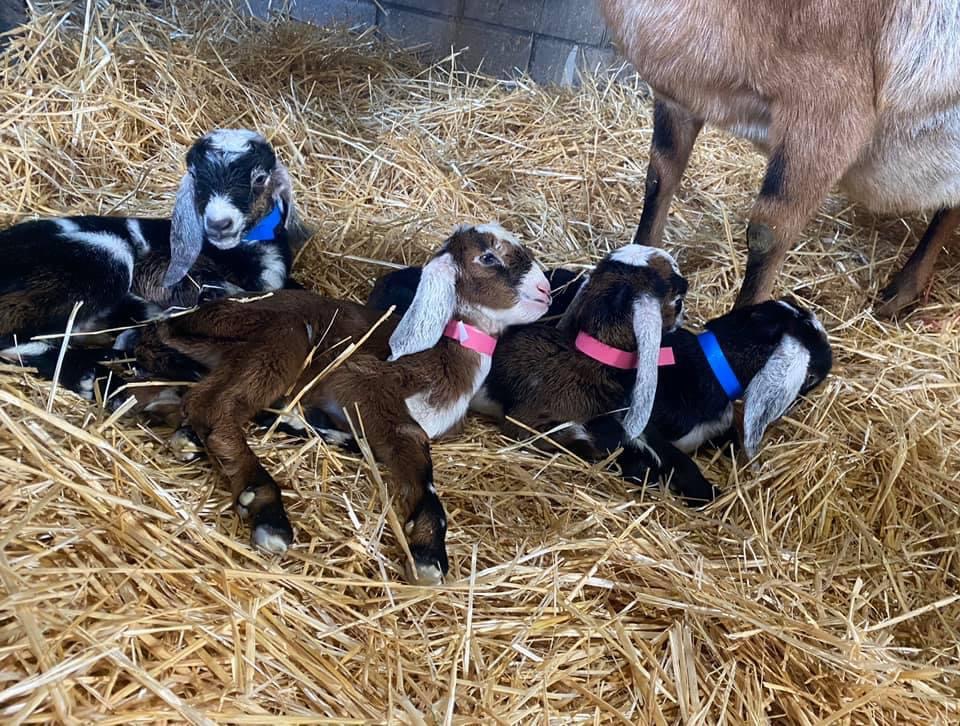
I then let the doe and the kids she’s left to raise bond and feed exclusively for two weeks. After the two week period is up, I begin overnight pulls. This involves putting the kids in a safe pen overnight with some alfalfa hay and a shallow pan of water. In the morning I will milk the doe, and then let the kids out of their holding pen to be back with their dam all day. Repeat every 12 hours. This becomes so routine that after a couple weeks, kids will start running to the pen themselves. I also begin feeding kids grain when pulled overnight, which acts almost like a treat and helps encourage kids to pen at night making it so much easier on the humans.
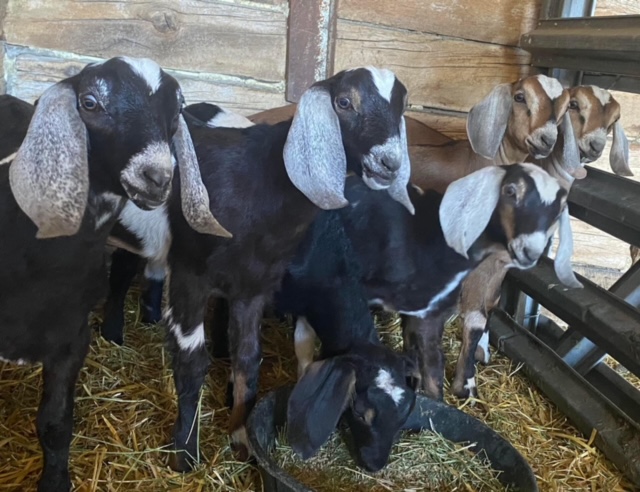
After pulling kids for the night, the does still come into the milk barn for grain and to be stripped out. They normally don’t have much milk at night (pending they are feeding twins), but keeping them stripped out will insure they aren’t getting lopsided udders. This “hybrid” management tool also helps increase the does production by utilizing supply and demand.
Some producers pull all kids directly after birth to exclusively bottle feed. This isn’t my protocol, except for when I have more than twins. I do know the CAE status of my herd, and participate in annual disease testing to ensure that my herd is CAE free. I choose to feed raw colostrum and raw milk to my kids. Many producers who pull all kids at birth do participate in a CAE prevention program, which involves heat treating colostrum and pasteurizing milk for kid consumption.