By Lacey Yates
Dystocia – Difficult or Obstructed Labor
No goat producer wants to deal with this. We do not look forward to it. However, if you have goats, you can count on dealing with dystocia. While I have a small herd, I can count on having at least one case each season. Then there are years like this year, where it seems every goat had some sort of minor dystocia and needed assistance. In my opinion, I think kidding issues are more common in dairy goats for a few reasons:
- Goats tend to have multiples and litters, which leaves much more room for kids getting tangled or wanting to come at the same time.
- We have removed goats from their natural habitat. We provide them with water and food, where naturally they would have to travel greater distances, keeping their bodies in great shape for labor.
- Nutrition is so important. Overfeeding can cause large kids needing help out, while underfeeding (including minerals) can cause deficiencies meaning weak kids, and weak dams that have a hard time during labor.
We can do everything right as producers, and STILL end up assisting labor. So expect the worst. Prepare and be ready. You will need to assist in delivering kids at some point, and the best thing you can do is be calm and prepared, and I will add to trust your instincts. A good example of trusting instincts: I had a 9 year old, 9th freshening doe kid this year. She started labor in the morning during chores. She presented with all the expected labor signs: pawing, nesting, the long streaming “goo” out her back end, restlessness. I put her in a kidding pen and waited. I let her progress naturally, but things just quit progressing after a while. She wouldn’t push. Now, after having this doe for 8 years, I knew what to expect with her, and something just felt off. So, I gloved up, went in with 2 fingers at first and about instantly met hooves. However, my suspicions were confirmed as I felt they were back feet. I did end up gently pulling, which did help her start pushing and she delivered the kid just fine. I’ll be the first to admit maybe she would have ended up pushing this kid out by herself eventually. However, these kids were AI (artificially inseminated) kids, and I wanted them out quickly and safely. The labor had been going on longer than I was comfortable with paired with her older age made me take action. The buck/doe twin kids made it just fine.
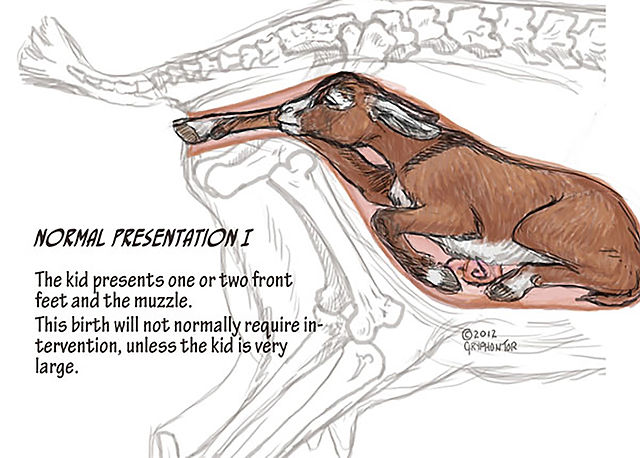
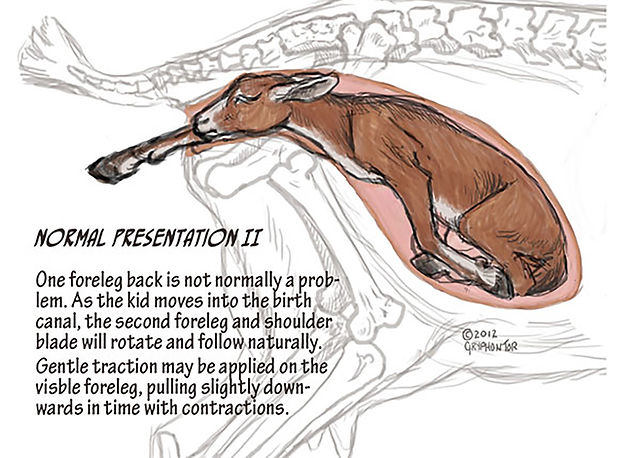
The basic things you will need on hand are gloves, towels, and some type of snare. (Kelly’s Kid Puller is a great one.) Kids should present “nose and toes”, diving, Superman position. They can also deliver with just a leg and head, or just a head. While they aren’t ideal, and could use assistance, normally just a head or leg with head doesn’t require repositioning.
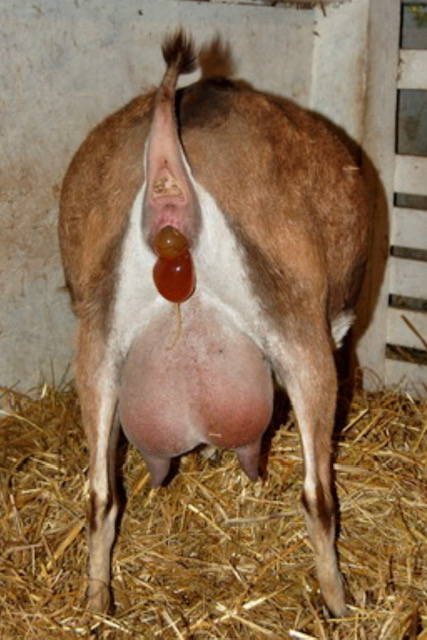
There is sometimes confusion about “the bubbles” seen during the beginning of labor. There are two types of bubbles: the “water” bubble and the one that the kid lives in. Both can be present, one, or none. The water bubble may break before presenting, and you can break either bubbles without fear of harming kids. Here is a picture of the bubbles presenting at the same time:
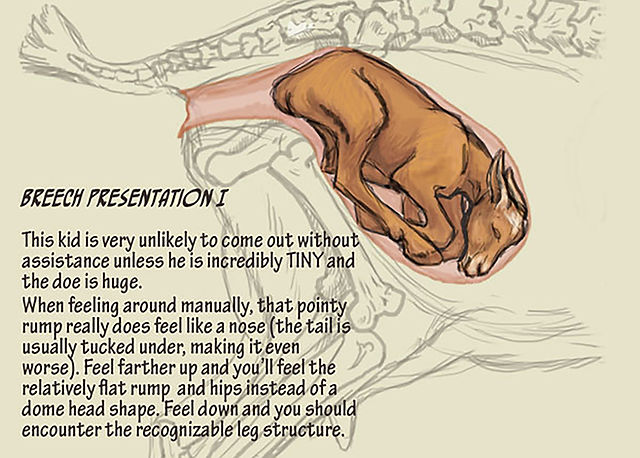
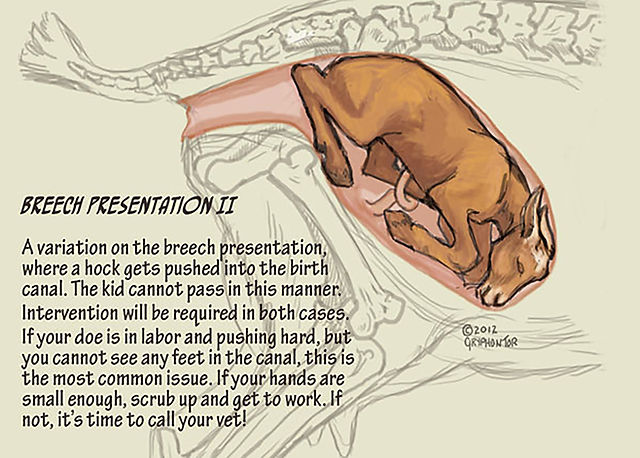
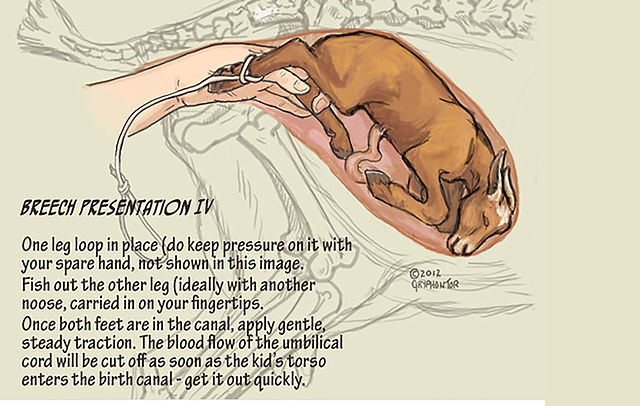
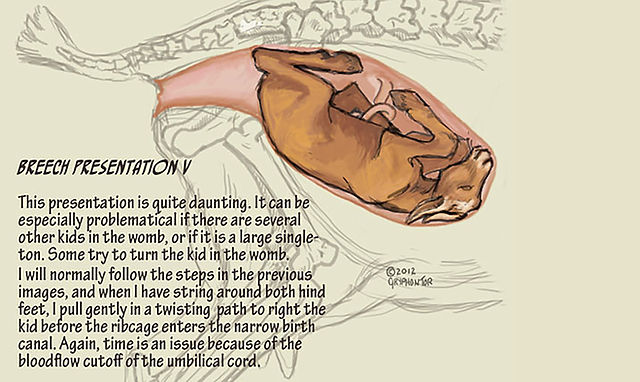
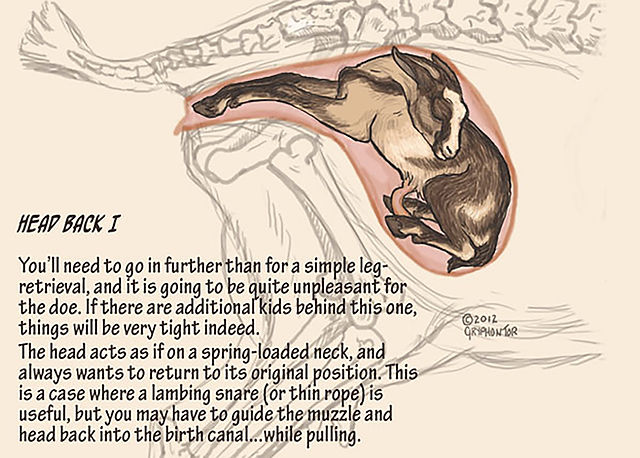
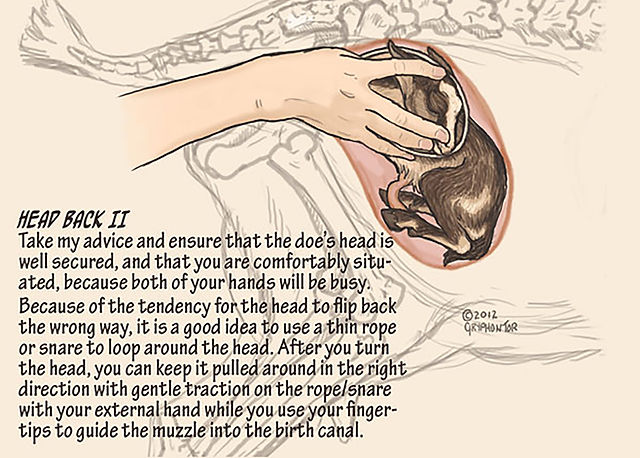
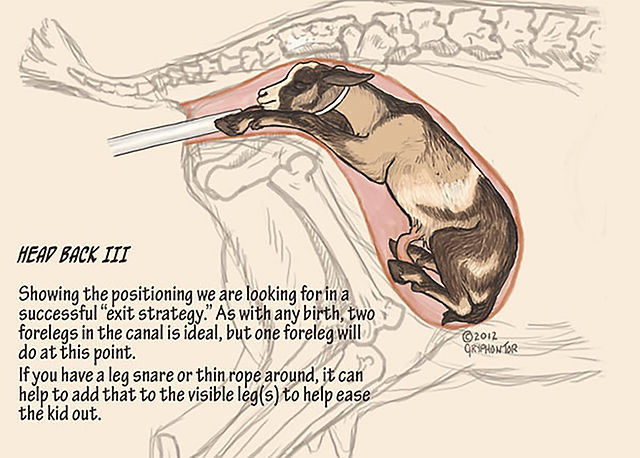
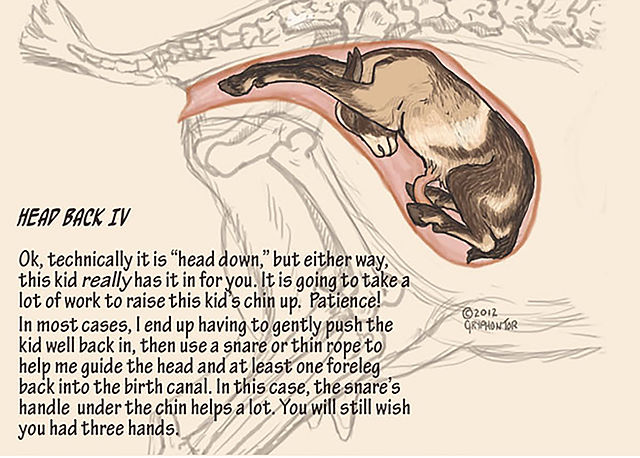
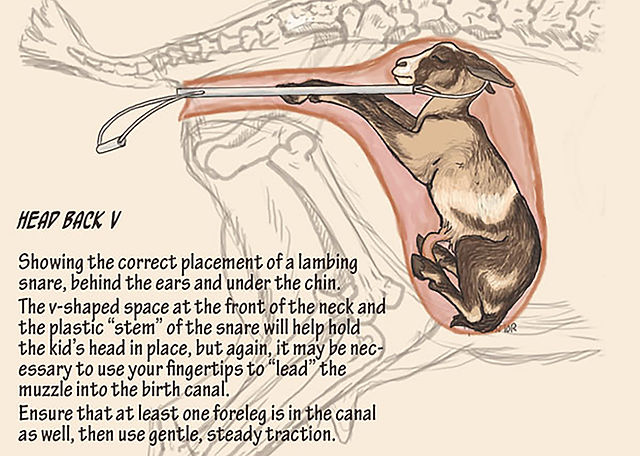
Below are visual pictures that Mythos Farm put out years ago. These are extremely helpful to have on hand, and even to print off!