
By Lacey Yates
Supplies:
- 18 or 20 gauge needle that is 1” or ¾” long
- Small 3 cc Syringe
- Correct Vac tube
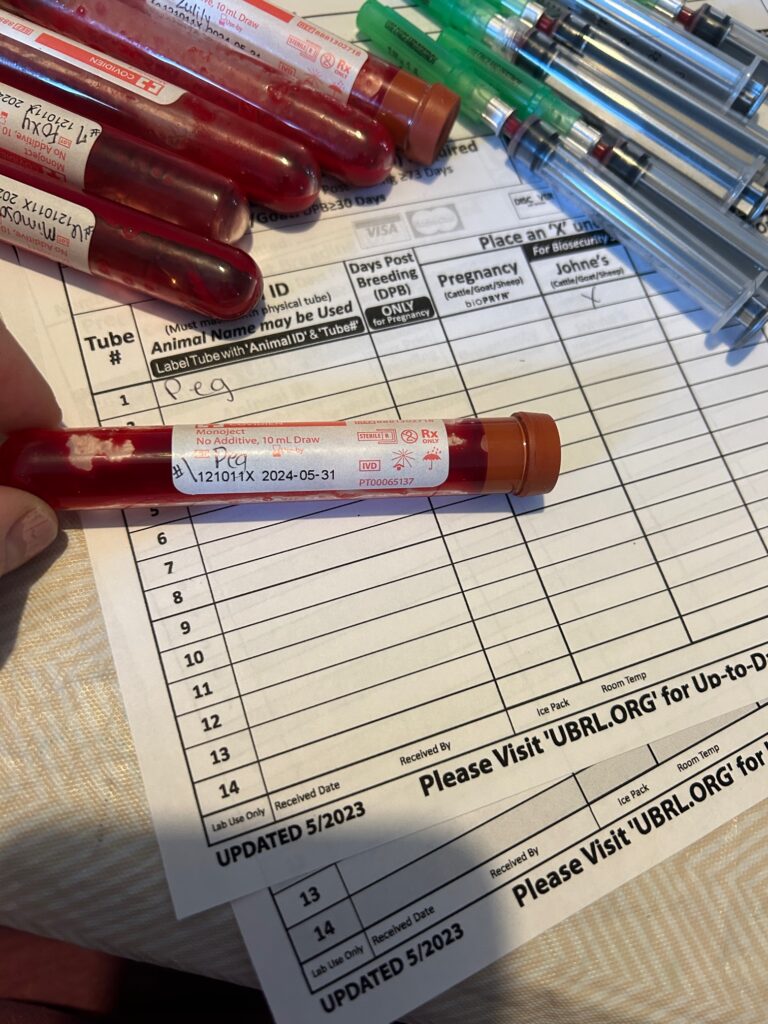
Supplies can be optioned from your vet or an animal supply store. The type of vac tube needed will depend on the type of test, so check you have the correct tube beforehand. Some labs will combine tests with one sample, which is really nice. The lab I use, UBRL, will run preg check, CAE, CL, and Johnes all with the same blood sample.
Steps to Follow
- Before catching and restraining the doe, label the tube with the animal’s identification information. Make sure your supplies are organized and ready to go.
- I like to shave the small area where the vein runs and you feel most comfortable working, this especially helps first timers see the vein easier.
- Restrain the doe. I prefer to just put the doe on the milk stand versus having someone hold her. I find she’s most comfortable on the stand, and do offer them a bite of grain during the draw. This helps keep them calm.
- Pull back on the plunger of the syringe before inserting it into the vein to make sure it pulls back easily (“un-stick” it as they all seem to stick at first).
- Apply pressure to the jugular groove above the vein with your thumb. You will see the vein pop up. While your thumb is keeping the vein popped up, guide the needle and syringe with your other hand and insert it in the middle of the vein while simultaneously gently pulling back on the plunger. When you’re in the vein the syringe will fill with blood. Gently pull the syringe out and apply pressure to the area for 30 seconds. Immediately transfer the sample to your labeled vac tube. Fill out paperwork and send it to the lab.
I have attached videos of a few different blood draws, both easy and more difficult. Some veins are easier to draw from than others. Some are straight, while others have irregular curves. Just remain calm and confident while having a gentle but firm hand.
Practice makes it easier and more familiar, but anyone can do it!
One Response