
By Kayla MacMillan
I remember well what it was like hopping in the vehicle and heading West across Canada. Hauling our milk goats and chickens, almost our entire acre homestead in a trailer to move across the country to a new land, leaving everything and everyone we knew behind us. That was over two years ago now, and since then, we have gotten rid of the goats, the chickens have been replaced with new ones, and the memories of Eastern Ontario still grapple in our hearts. Saskatchewan, Canada, is home to us now, where we live on 64 acres with beautiful woods and pastures. The dream for me was always a family milk cow, but being on a small homestead previously, two dairy goats was all the land could handle. I didn’t grow up in a farming/homesteading family. Processed foods graced our tables more times than a homemade one did. Do not get me wrong, I was thankful to be fed either way. However, I always knew the lifestyle of Laura Ingalls called upon my heart more than a life in the suburbs ever would. It’s how I dreamed of raising our children, wild and barefoot. So when the opportunity came to buy land and be free of a mortgage and debt, we took it. We stopped living the life we couldn’t afford and pursued a life much slower but not void of a lot of hard work or responsibility.
So how does one who grows up a country kid, but never has a single farm animal, come to tend to her own hobby farm? I mentioned we never grew up this way, my husband and I, rather we ended up here, first generation homesteaders. It started with a dream, and I (Kayla) am the dreamer. My husband (Andrew) is the facilitator of said dreams. Nonetheless, we knew nothing when we decided to dip our toe in. Naturally, like most of us, when we want to learn how to do something we tend to run to YouTube and books. I’ve graduated from many “YouTube university” classes, but nothing beats learning alongside a willing and patient teacher.
When we moved to Saskatchewan it wasn’t long before the goats were breaking out of the cow fencing and nibbling on my apple trees. I stand by to this day, that bringing my two dairy goats across the country while milking them along the way was my equivalent of a middle-aged man’s buying a sports car mid-life crisis. It’s a decision I deeply regret putting my family through. While we can look back now and laugh about it all, it was a choice I wouldn’t make again. So, a few weeks after the move, I sold the goats and went big; I bought a jersey cow.
Wondering if I would still be married after it all (joking) I told my husband of the newest idea. Really, it was a great idea, just think about all that butter and cheese we will have. He was sold on the idea or, rather, maybe accepted we were now going to be cow owners, and this was the final and last homestead change I would put us through. By now, we have done meat birds, rabbits, bees, and goats, and when I say I have no desire to try anything else…I mean it. It’s been two years since we moved, and nothing new has grazed the land. Not to say never, but other than chickens and cows, we likely are done with the homestead adventuring. There’s a fine line between what works and flows well and major homestead burnout. Milkmaids, you know that having a family milk cow is a lot of work. Currently, I milk two family milk cows by hand twice a day with the help of my husband and children, and our plate is as full as a Thanksgiving platter.
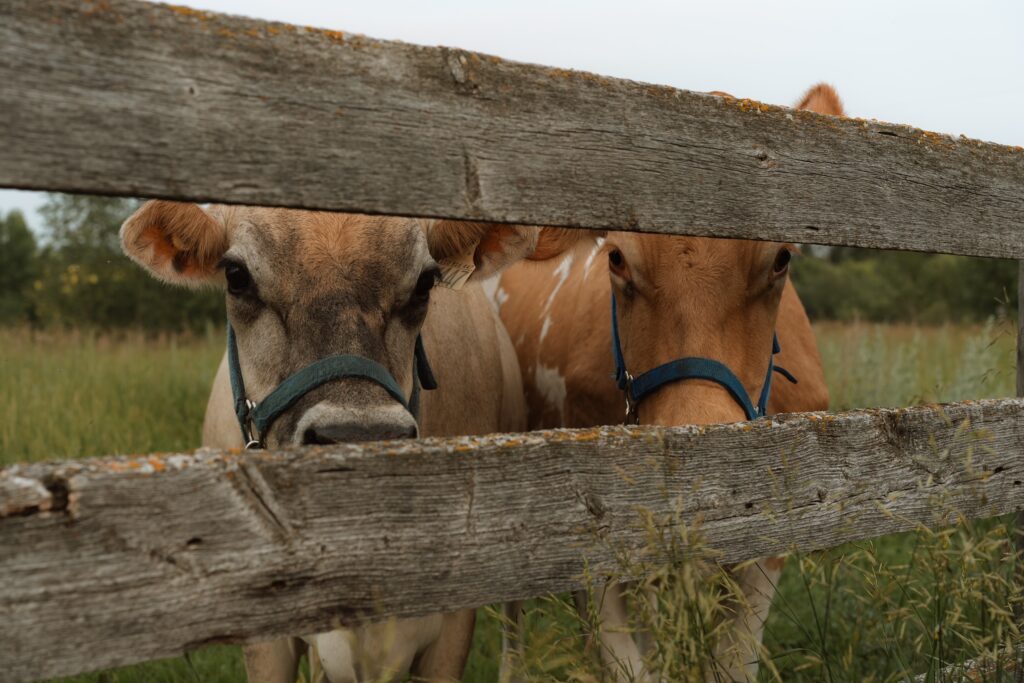
I’m just over two years into the milk cow journey and dear friends, my greatest asset in this journey has been my mentor. It wasn’t just the Instagrammers of it all, the YouTubers, or the Facebookers, that got me where I am today. I have had a few people come alongside me in my homesteading journey over the years. Many of them have left a lasting impression on me, and I’m incredibly thankful for their shared wisdom. I would not be the milkmaid I am today if it wasn’t for me connecting with another Saskatchewan milkmaid through Facebook. Not only was I in the pits of despair, missing my home, my friends, and my previous homestead community, I felt like getting a family milk cow was a bit more than I could chew alone. Now, don’t get me wrong, sometimes you just need to jump right in. I had milked a dairy animal before, so I knew my way around a milk pail. However, there’s more to know than just the milking portion of it all, like artificial insemination, minerals, metabolic disease, disease, nutrition, hoof care, calf care, etc.
Tara came into my life at the right time. I needed to breed my jersey back, and she was the one in my area that had a tank and the means to service my cows. This is how I met her in person. I wish I could say how it all happened, but we texted and communicated, and Tara always made me feel like I was never a bother to her. Even though, looking back now, I know I asked her some pretty dumb questions, she was quick to answer them. I kinda asked Tara if she would take me under her wing, but she also kinda stepped in and just took it on, too. I think Tara saw what I couldn’t see at that time, and that was I had the ability to learn and carry the weight of being a milkmaid, and I was also pretty desperate for some bovine guidance. There is no way to describe the value Tara has brought to me through this experience. She has pushed me towards new goals, like breeding heritage breen Guernsey cows, and training a heifer in the milk stand. She has also not always taken it easy on me. I’ve received my fair share of tough love, but that never came with condemnation when I made a mistake. Tara has always had my best interest and looked out for me, and for that, I’m incredibly grateful.
I want to encourage you, milkmaids and future milkmaids, that community is your greatest asset. I believe good information is meant to be shared. However someone chooses to share that information whether it is by writing a book or creating a community online, the experience of others is a valuable resource to any beginner. The things I have learned from Tara have been passed along to my followers @milk.and.honeyhomestead often on Instagram, and I don’t believe that when someone asks for help and you have the answer, you keep that to yourself. I try to be a help to my community anytime I feel I can.
So, how does one meet a mentor? Friends, getting yourself out there in your community is the only way to meet someone who is willing to come alongside you. Your local farming and homestead community likely has someone around who is willing to pick up the phone in a time of need. I encourage you to put yourself out there and be humble in doing so. Everyone, once upon a time, was also a beginner, and people who truly love agriculture do not want to see it die. Homesteading skills have greatly been lost from the use of modern-day convenience and we want to see you thrive in bringing back the ways of old. The seed had long ago been planted in my heart to be a milkmaid. Tara just helped me water it so I could grow. Because of her heart for agriculture and dairy cows, she passed something on to me along the way. Tara has mothered me along the way better than any family member ever could have, had I been raised in agriculture.
Things to Look for or Consider When Searching for a Mentor
Here are some things to consider before going under the proverbial wing of a dairy cow mentor.
How do they run their own farm and keep their dairy cows?
Are they housed the way you would want to see your cows taken care of with clean bedding , fresh water, feed, and minerals? This is something I admired in my own mentor. Her farm and heart towards her animals were admirable and just as how I would hope to keep good care of my own dairy girls.
Does the individual wish to take on the role of mentorship?
Please make sure you consider asking whomever you feel would be a fit for you if this is something they would be willing to take on. Do not assume that because they have answered one question for you that they are willing to answer many more or take the time to help you through an emergency. Make sure you’re clear on your expectations of what you’re looking for.
Consider ways to make it up to them.
My mentor doesn’t charge me for the time I take up texting, etc, and I have yet to have one who did (minus services I’ve hired them for, like AI, of course), but I’m always filling her cup in a way that I can. Sending her home with honey, meat chickens, paying for breakfast out or gas, etc. They’re ways you can pay it forward to show appreciation, and whatever that looks like, please do not neglect to repay kindness with kindness. I never would want someone to feel I was taking advantage of them. So please pay it forward somehow, even if that means asking them how you could serve them.
Is the person patient and kind?
Sometimes people want to take beginners under their wing for their own egos. While this is few and far between, I’ve still seen it. They gloat and mock their failures and insist that their way is the only way of doing things, etc. While I’ve had moments of wanting to try my own thing, I’ve never been shamed in doing so. For example, Tara’s cows wear collars, and mine wore a halter for a very long time. Tara disagreed with me using a halter and while I didn’t see the issue, she didn’t argue with me about it. Now I have two cows and one keeps the halter on and the other wears the collar. Tara now agrees the one with the halter likely needs to keep it most of the time because she can’t be trusted. It comes on and off. The Guernsey, by the way, is the sweetie with the collar. I’ve never been condemned for this. They’re times I’ve come back to her with my tail between my legs and said, “you were right.” They weren’t life or death matters but just small things that made a difference. She never gloated on my failures. Is this person respected in the community?
Are you humble enough to accept being told when you’re wrong or to toughen up?
I can guarantee you that there will be times when your mentor will give you a dose of reality. It will sting in the moment and maybe even make you mad. But are you humble enough to take the information given to you and chew on it coming from someone who is more experienced than you, or are you argumentative and tend to be a more prideful person?
If you’re looking for someone to take on teaching you what they know, you need to learn to listen. Are you teachable? I would challenge you to ask others who live with you this question. If they say no…you have some inner work to do before asking someone to teach you. You need to be teachable.
Are you willing to help others as you have been helped?
I said before that information is meant to be shared. Are you willing to come alongside someone who is greener than you are? The community of agriculture needs to stick together. It’s high time we continue to build each other up and build back what’s been lost for a long time. Keeping a family milk cow is so much more than the Instagram photo of a sunrise milking. Community sufficiency is the goal. We hear alot about self sufficiency, etc. but reality is, we cannot do it all alone. Community is what it takes to be less dependent on the system and keeping your food close to home.
Everything I have learned over these last few years I have deeply cherished. We know life is short, and it has been a great honor to have been taught so much by such a kind, wise soul. I hope if you are longing to become a milkmaid you find a mentor that is willing to share with you some wisdom. If you’re already a milkmaid, I hope you will consider taking on or helping someone who is new along the way. While I’m not as green as I once was, I have come to learn there’s always someone who knows more than I do, and I’ve become a very good listener. It has served me and my animals well.
A mentor is someone who sees more talent and ability within you, than you see in yourself, and helps bring that out of you. – Unknown
You cannot transmit wisdom and insight to another person. The seed is already there. A good teacher touches the seed, allowing it to wake up, to sprout, and to grow. – Thich Nhat Hanh
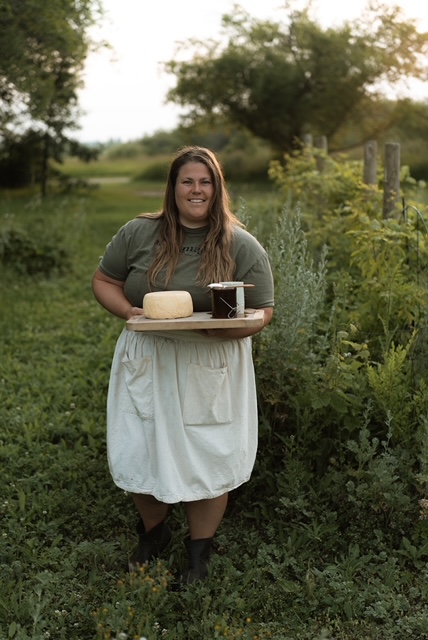
Kayla MacMillan @milk.and.honeyhomestead
One Response