
By Lacey Yates
I know I’ve been riding the proverbial “on-farm lab” train, but bear with me for one more post about it. On-farm labs are invaluable and I think every milk producer should have one! They provide you with access to very quick and reliable results whether you’re screening your milk to ensure it’s produced responsibly or if you need to diagnose and treat mastitis in a timely fashion (and then retest after treating to ensure your method of treatment worked). I love the Accumast trays for mastitis testing. These are at home trays requiring an incubator set up at 37*C (98.6*F), with results showing 16 hours later (but in many cases can be seen in as little as 8-10 hrs).
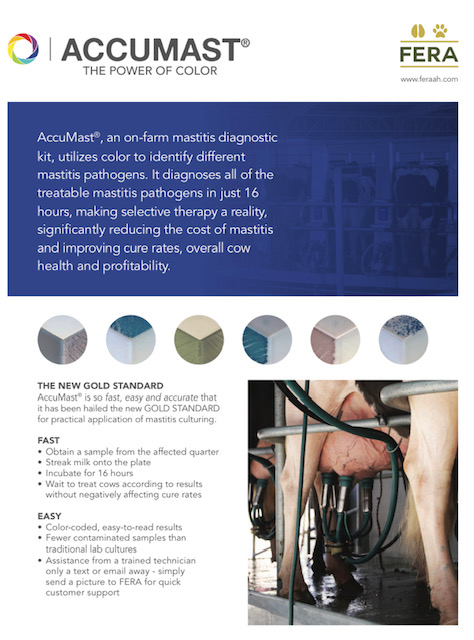
This eliminates the added wait time of shipping samples to a lab, along with the added shipping costs and high outside lab costs. Accumast trays are $28 for a 4 tray pack, breaking these down to be $7/tray. You can even test more than one quarter on a tray at once if you prefer.
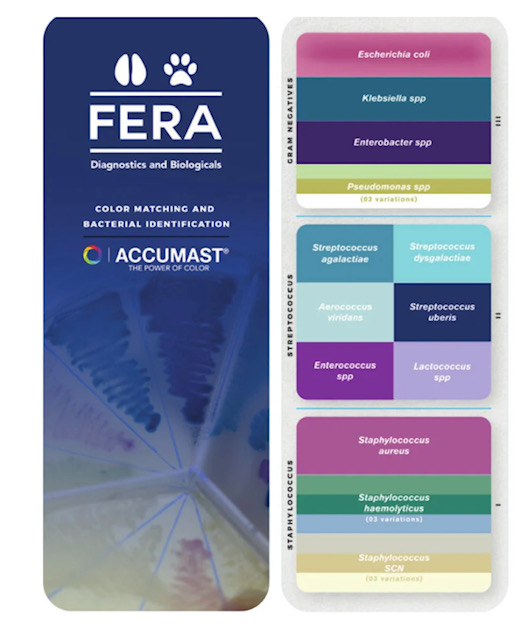
Accumast trays not only get you quick and affordable mastitis results, but they pinpoint exactly what strain of mastitis your animal is dealing with. I think many people are blind treating mastitis to avoid the shipping and lab fees along with the long wait time it takes for the samples to arrive at an off site lab. Blind treating leads to resistance issues, along with the big possibility that you aren’t even treating the specific strain of mastitis your animal has with the correct antibiotic! Accumast provides very easy to read, color coded results.

How to Get a Clean Catch
Getting a “clean catch” (milk sample from the infected quarter) is vital to avoid a contaminated culture. There is a correct way to get a clean catch the first time. Here are the steps to get a good sample the first time!
- Label a clean and sanitized sample tube (you can use a small glass jar as well, make sure the lid is also cleaned and sanitized prior)
- Brush loose dirt, bedding, and hair from the udder and teats. Thoroughly wash and dry really dirty teats and udders before proceeding with sample collection. Discard several streams of milk from the teat. Dip all quarters in an effective pre-milking teat disinfectant and allow at least 30 seconds contact time.
- Dry teats thoroughly with an individual towel. Beginning with teats on the far side of the udder (if sampling from more than one quarter), scrub teat ends vigorously (10 to 15 seconds) with alcohol prep pads. Teat ends should be scrubbed until no more dirt appears on the pad or is visible on the teat end. A single prep pad should not be used on more than one teat. Take care not to touch clean teat ends. Avoid clean teats coming into contact with dirty tail switches, feet, and legs.
- If collecting sample from more than one quarter, begin sample collection from the closest teat and move to teats on the far side of the udder. Remove the cap from the vial, taking care not to touch the inner surface of the cap. Hold the vial at approximately a 45-degree angle while taking the sample. Do not allow the lip of the sample vial to touch the teat end. Collect several squirts of milk. Replace cap to vial. You’re now ready to proceed with lab culturing.
How to Make the Culture
Now that the hard part of getting a clean catch is over, it’s time to make the culture. Dip a swab cotton tipped into your milk sample. If needed, tap excess moisture/debris off on the side of your vial. Use a side to side motion to lightly streak onto the surface of first section of the plate, covering the entire media. Re-dip the swab into the sample and repeat for each of the next sections, dipping into your sample between each. Label the plates with the cow info on the bottom and place upside down (on lid) into incubator at 37*C. All bacterial organisms will grow within 16 hours, although in many cases the causative organism can be identified in as little as 8-10 hours.
It is recommended that you re-culture 1-2 weeks post treatment to insure the infection has cleared.
Accumast trays should always be kept on hand for you to have quick and accurate culture results to give you an edge and improve the treatment outcome of your next dreaded mastitis case!
The link below is for interpreting all Accumast results, and also includes the recommended treatment plans.
One Response