
The “Clean Break”, its a cheesemaking rule to live by. Only cut the curds when you achieve a clean break or else you risk loosing solids in your whey, and creating an uneven textured cheese. This is the rule that I have followed for years, and it has helped me to make really good cheese, yet lately, I find myself breaking my clean break rule and here’s why!
Flocculation
Flocculation is a fancy scientific word that in cheesemaking, basically means how quickly your casein proteins (the building blocks of cheese) are binding together. As cheesemaking is an art that keeps you learning, if you have been making cheese for awhile and want to step up your game, testing flocculation is a great way to help you make better cheese.
Flocculation is a step up from simply checking for a clean break, because it allows you to test whether a cheese is ready to cut based on the style of cheese you are making and how much moisture you want to retain in your curds.
How to test for Flocculation
Step 1- Add your rennet to your milk as you normally would. Place a small dish or anything that will float onto the surface of you milk. Cover your pot. Start your timer.
Step 2- After about 5 minutes check if you can still spin the dish. If it still floats freely and will spin, continue to come back every few minutes and flick it. Once your dish becomes “stuck” and will no longer spin, stop your timer. This is your flocculation time.
How to determine when you should cut your curd using flocculation
Once you have determined your flocculation time, you can use this time in a simple math equation.
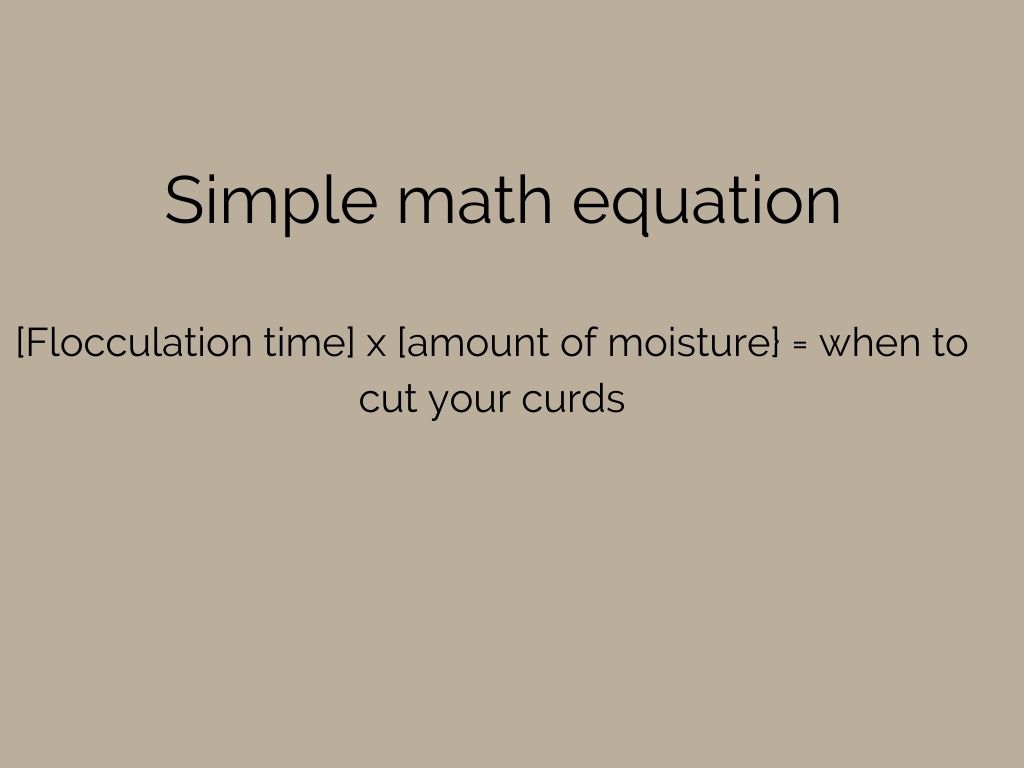

Say you determine that your flocculation time is 20 minutes. You are making an alpine style cheese so your math equation would be; 20×2=40min. You would cut your curds at 40min.
It is a pretty simple implementation to make if you have been making cheese for awhile and have a good grasp on cheesemaking. Im excited to start eating the cheeses that I have made using flocculation and see the differences that it makes in the final cheeses!