
By Robyn Jackson
As I write this I am headed down to Idaho to speak at the Modern Homesteading Conference. I have two presentations to give, one on cheesemaking and the other on supporting your milk cow throughout her lactation. One of the main focuses of my milk cow presentation is teaching people how to prevent and monitor for ketosis in their milk cows. I thought this would be a great topic to review in the Milkmaid Society this month because many milk cows experience ketosis and it can often go unnoticed. It’s also often referred to as the gateway illness because having it acts as a domino effect opening your milk cow up to many other problems.
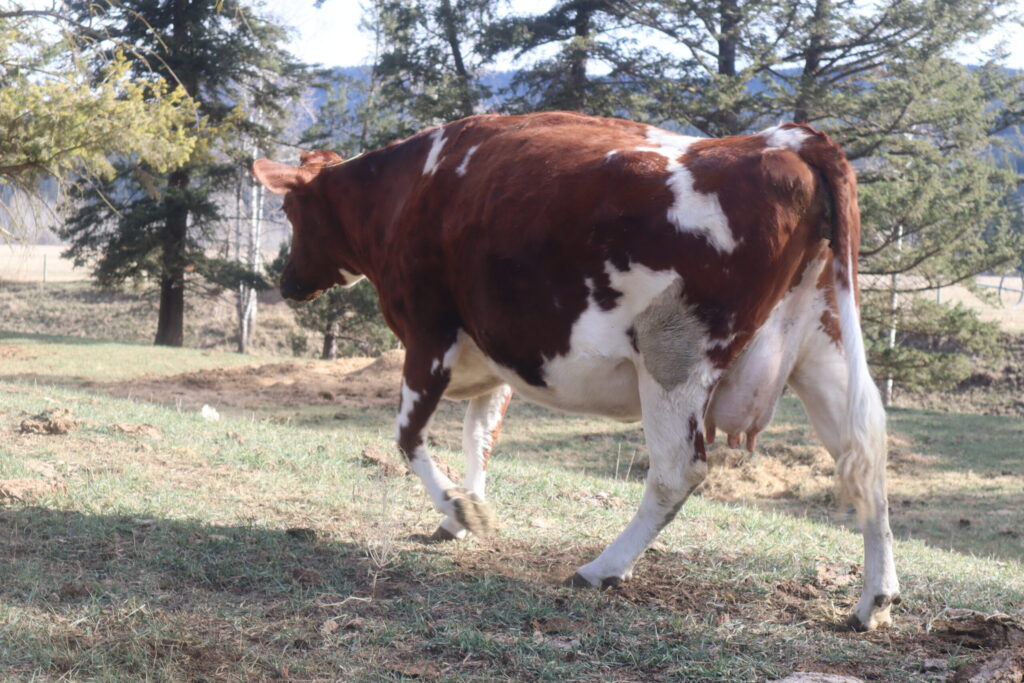
What is Ketosis?
Ketosis is a negative energy balance meaning a cow is outputting more than they are inputting. In these cases instead of consuming or metabolizing enough energy from their food, they end up digging into their fat stores. When fat is excessively used as an energy source fatty acids can build up in the liver before the liver has a chance to metabolize them. Cows with ketosis also often have low blood sugar. All of this can cause many different symptoms of ketosis, some of which can be deadly.
Signs and Symptoms
The signs and symptoms of ketosis often go unnoticed and can range from mild to severe.
• Decreased appetite is usually the first sign
• Sweet smelling breath
• Low milk production
• Sunken eyes
• Unsteady gait
• Neurological symptoms such as bellowing, excessive licking, acting odd
• Difficulty breeding back
How Is It Diagnosed?
If you see any of the signs and symptoms of ketosis or if you have a milk cow that is not in a proper body condition for her stage of lactation (either over conditioned or under conditioned) you should test her for ketosis. You can test cows for ketosis using urine test strips from the regular pharmacy. The human or animal ketosis strips work for cows! You can also order specific blood or milk strips online. Ketosis strips are an excellent tool to keep in your vet kit, because they are inexpensive and they give you peace of mind if you are ever wondering about the health of your milk cow.
Ketosis strips work by measuring ketones in body fluid. During the metabolization of fat in the liver a chemical called ketones is produced which the body uses as an energy source. This acts as a marker telling us that the cow’s body is metabolizing fat for energy.
What Cows Are At Risk for Developing Ketosis?
Milk cows at any stage of lactation can be at risk of developing ketosis, but they are at a much higher risk if they have one or more of the following risk factors;
- Newly freshened cows (usually 1-2 weeks after calving)
- Cows at peak lactation (usually 4-6 weeks after calving)
- Cows that are over conditioned
- Cows that are under conditioned
- Cows that are not eating or have decreased appetite
- Cows that are being fed poor diets
- Genetically predisposed
Prevention of Ketosis After Calving
Ketosis can affect cows at any stage of lactation but it is primarily prevalent in the first 1-2 weeks after calving. This type of ketosis is often referred to as type 2 ketosis. It is caused by an increased demand for glucose due to milk production. Newly freshened cows often have decreased appetites, combined with the stress on the body of calving and a sudden surge in milk production, it can be the perfect cocktail leading to ketosis. Cows that are over conditioned coming into calving are also at much higher risk because they end up burning fat more so than other cows.
- Have your cow in optimal condition coming into calving. Typically this falls at about 3.25-3.5 on the body condition score chart.
- Transition feed your dairy cow by starting them on a portion of their grain ration a few weeks before calving. This way they can start their full grain ration right away after calving and don’t need to be weaned onto it. (See last months blog post all about supporting your cows diet through her lactation)
- Feed your cow molasses water after calving. 5 gallon pail of water mixed with 1 cup of molasses. Offer directly after calving to give an energy boost that will entice her to eat. • Feed her palatable diet that she actually wants to eat and is good quality. For us, this is our high quality second crop hay that is a mix of alfalfa and grasses.
- Monitor her for signs of decreased appetite and make adjustments in her diet to rectify this such as add molasses in her feed to entice her to eat. Cows with ketosis will often refuse grain over grasses.
- Free choice loose minerals and salt.
Prevention of Ketosis at Peak Lactation
It is important to support the lactating cow with very good quality diets. It is expected that cows’ body condition will begin to fall as they produce more and more milk but there is a normal range for how quickly and how far it should fall. Cows that are not receiving the energy they need to make the amount of milk they are producing will begin metabolizing fat in their livers at a high rate and this can lead to problems. Ketosis that occurs at peak lactation is typically referred to as type 1 ketosis and it is often diagnosed by unexpected low milk production.
- Feed your lactating cows a diet that meets their nutritional needs including high quality hay or forage, supplemental grains and loose minerals and salt. (See last months blog post all about supporting your cows diet through her lactation)
- Monitor your cow’s body condition so that you can make changes to diet if needed.
Treatment for Ketosis
Best practices for treatment are ever changing, so always collaborate with your vet to determine the best treatment for your individual cow. Typically treatment includes;
- IV dextrose to give a immediate blood sugar boost
- 5 day course of propylene glycerol drenching
- Vitamin B12 injection