
Sharing is caring!
Using Clabber As A Starter Culture For Cheesemaking
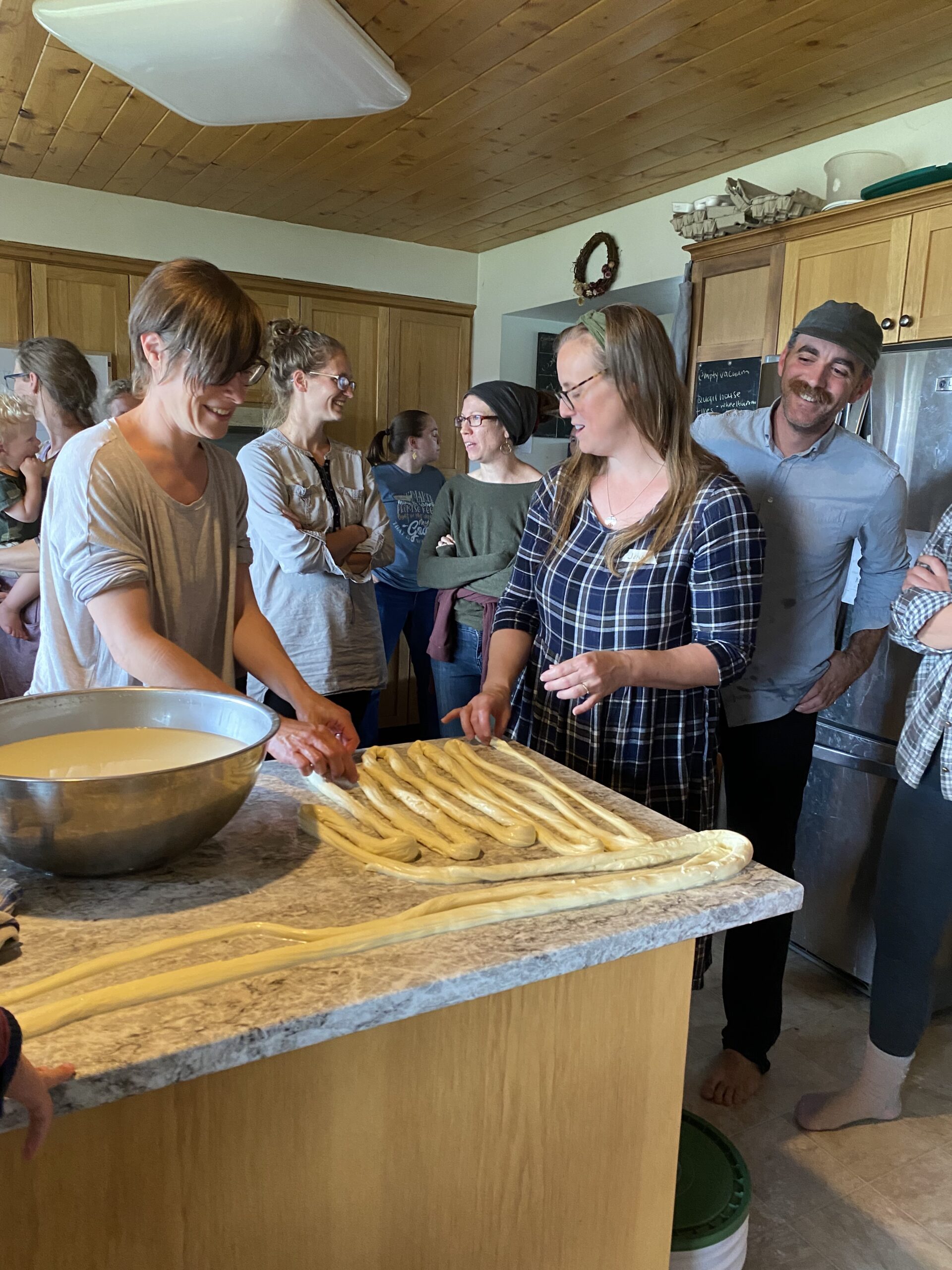
As many of you know I recently was lucky enough to attend a course with David Asher. David is the author of the popular book The Art Of Natural Cheesemaking. His cheesemaking is unique in that all of his recipes are made using natural starter cultures and his views on traditional raw milk handling are very refreshing.
One of the main things that we learned at this class is how to keep something called a Clabber culture. A Clabber culture is raw milk left on the counter until it coagulates. This coagulation is caused by lactic bacterias present in the raw milk, feeding on the lactose in the raw milk and fermenting the lactose into lactic acid, this than in turn, causes the protein structure in the milk to weaken and come together causing coagulation.
How To Make Clabber
Many people unintentionally make clabber by forgetting raw milk out on the counter, or intentionally make it for farm animals like chickens, so that they can better digest the milk. The difference between just leaving milk out to clabber and using it, verses leaving milk out to clabber and keeping it as a starter culture is that keeping clabber as a starter culture is very similar to keeping a sourdough starter.
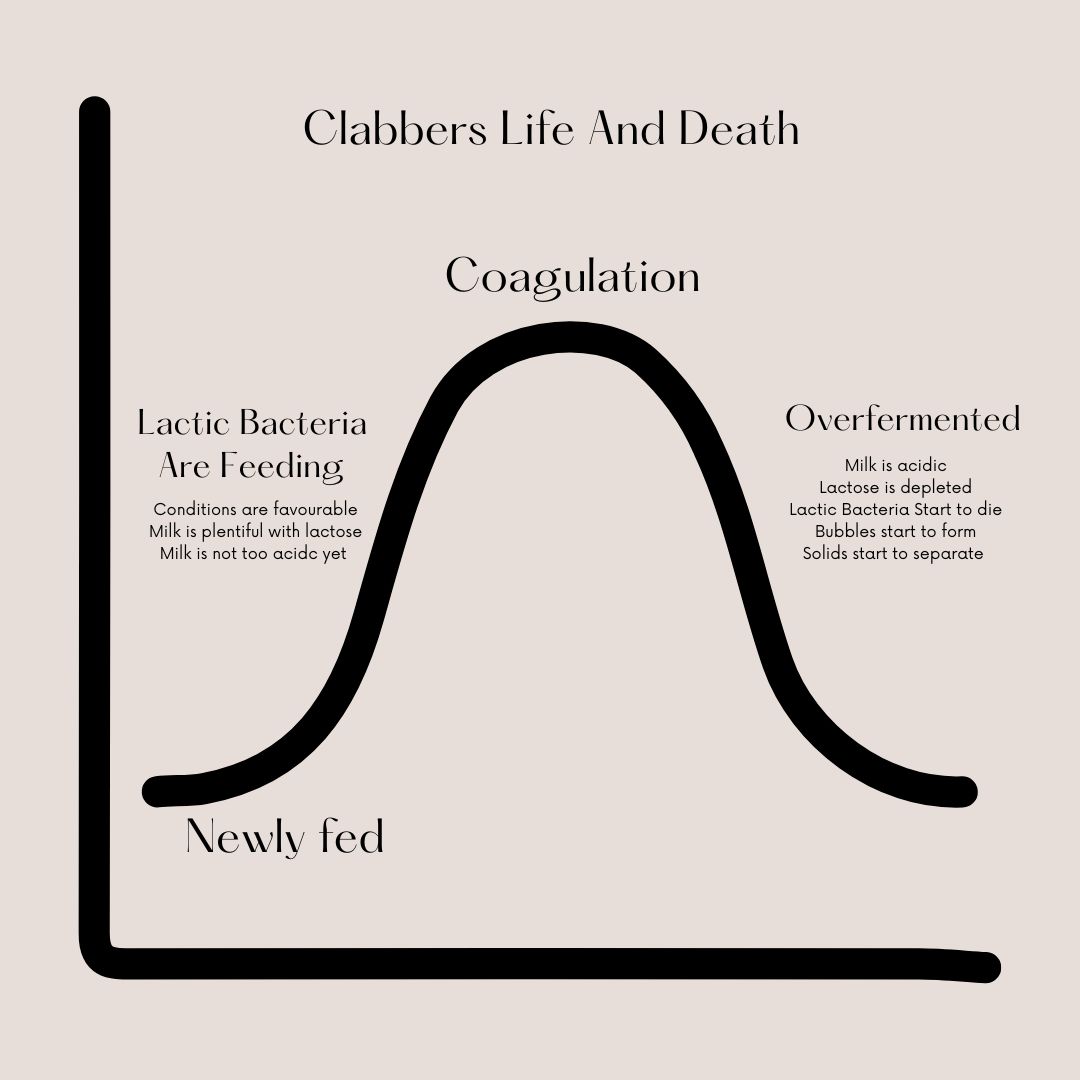
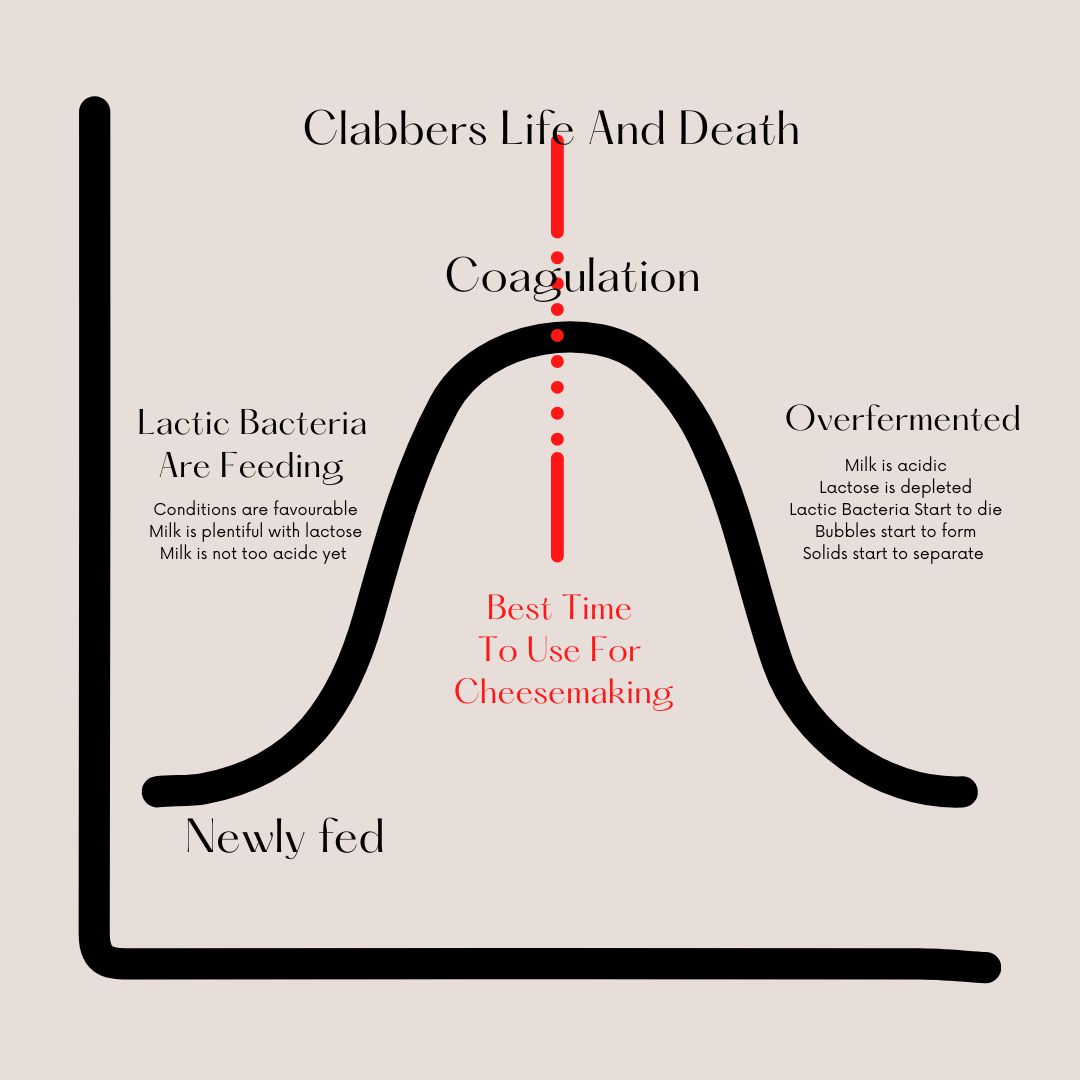
In order to foster a strong starter culture, you must feed it and care for it, to help the bacterias become plentiful and strong. When you think about using clabber as a starter for cheesemaking, its helpful to think about clabber in terms of a bell curve. Check out these charts to help you understand what is good to use for cheesemaking and what has over fermented.
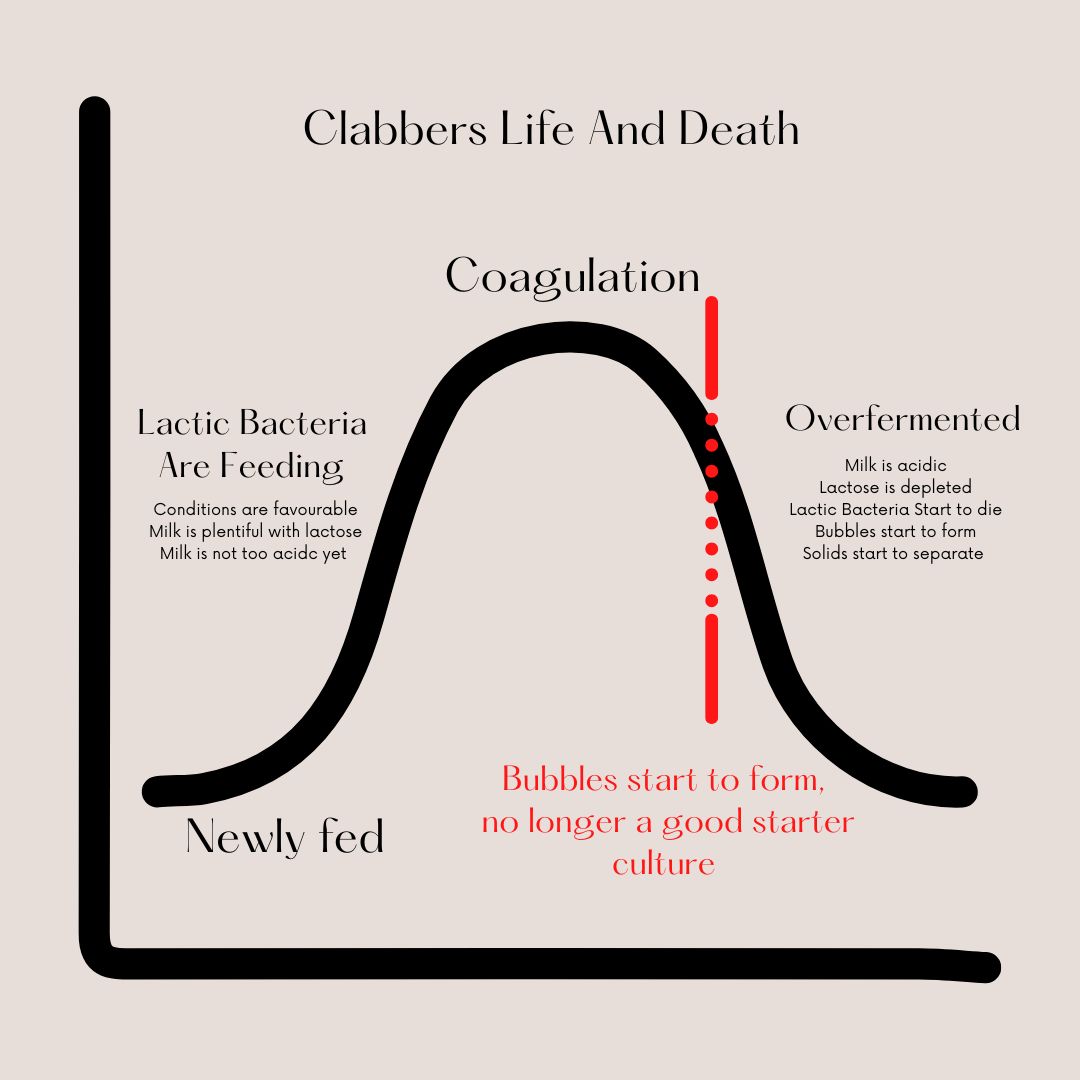
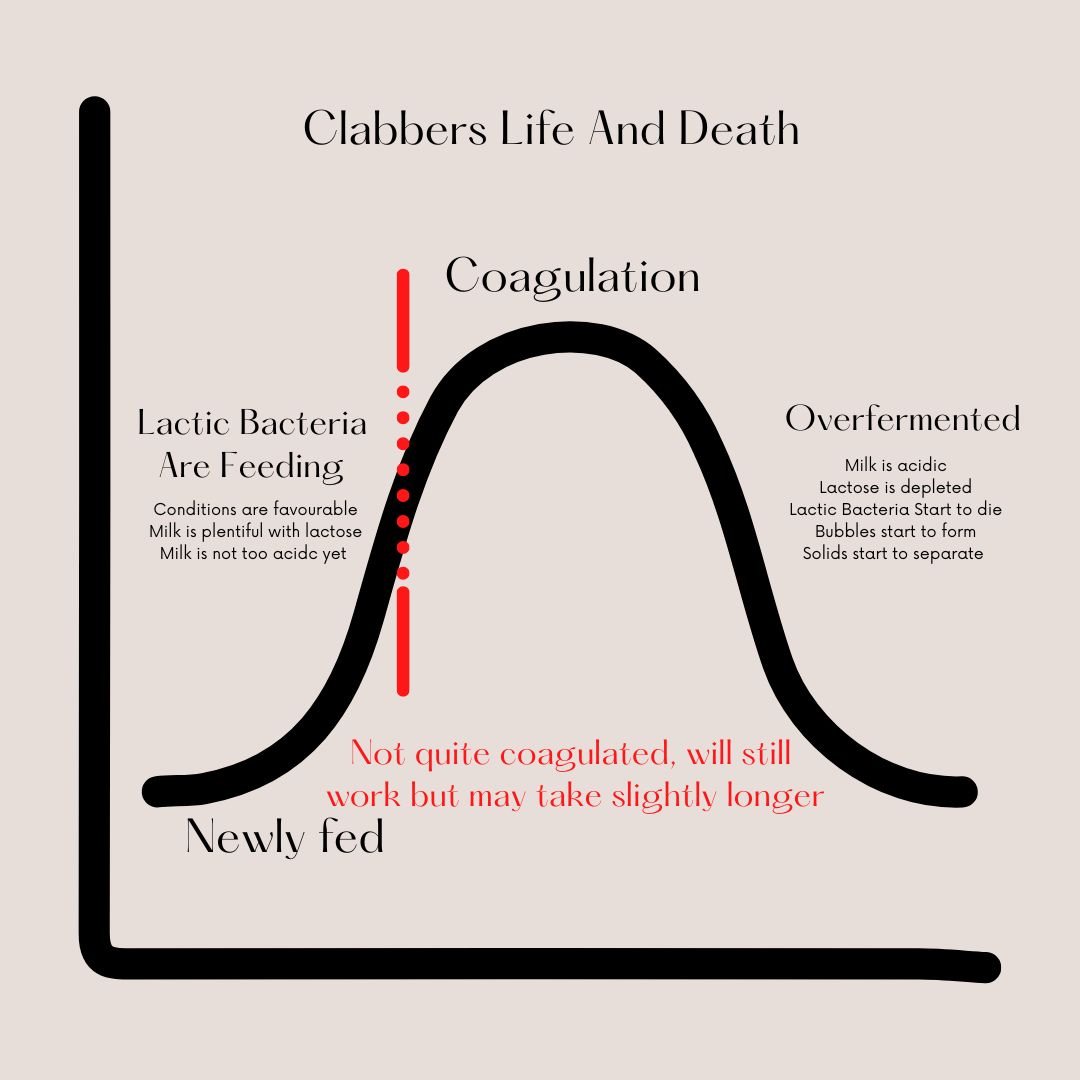
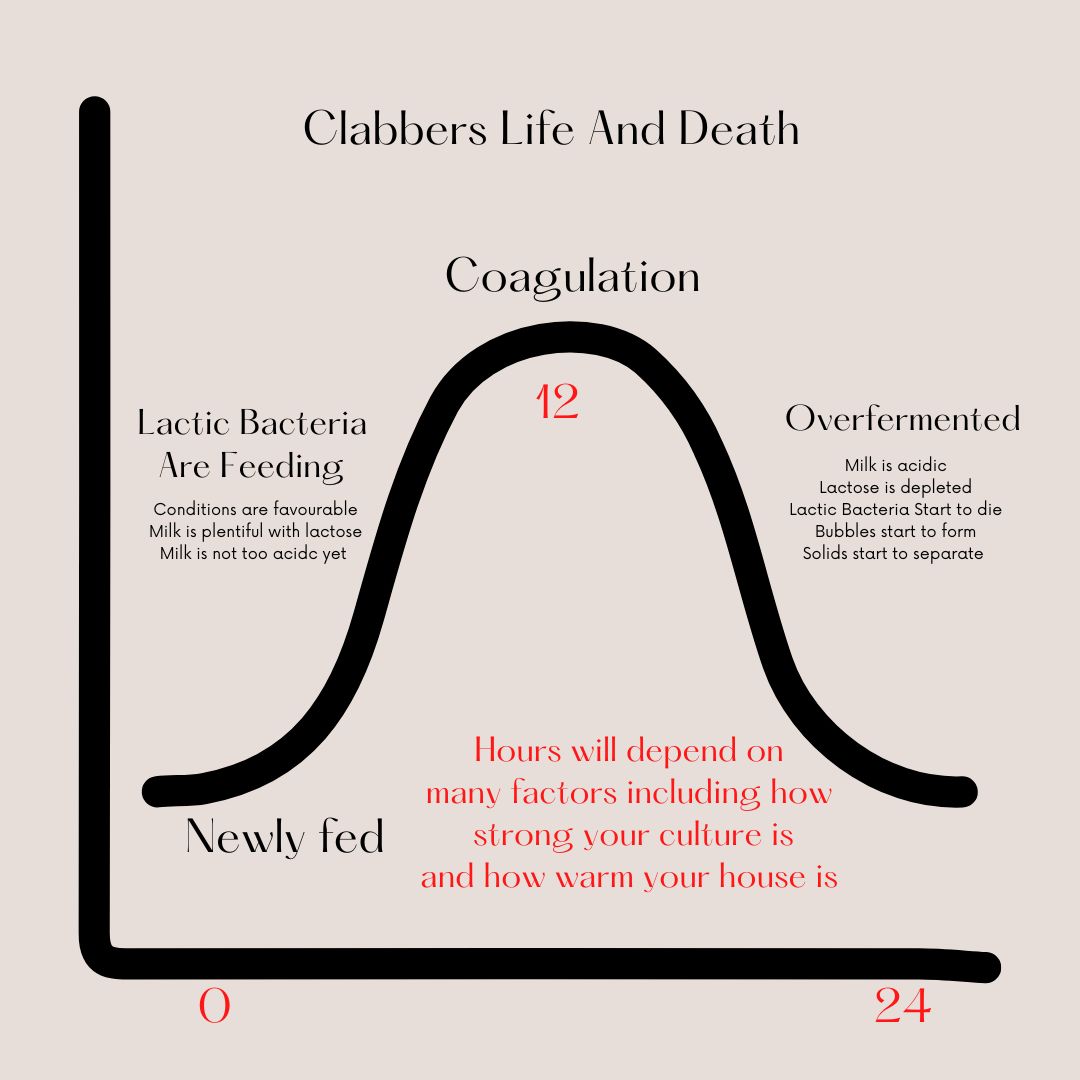
When you first start clabber all you have to do is set warm fresh raw milk out on the counter in a jar. I recommend starting about a pint. Unlike other ferments, it doesn’t matter if the lid on the jar is tight or loose, it will ferment either way. Depending on your milk quality, and the temperature in your home, this first ferment will be the longest. You may not see complete coagulation for a few days.
As soon as you see coagulation, your starter is ready to be fed. Just like sourdough, you need to discard some of your ferment before adding in new milk. This first discard is not suitable for a cheesemaking starter culture but it can be used for tons of other recipes. Check out the recipe section to see some of the sour milk recipes I have been working on. Discard the majority of the contents of the jar. Keep back about 1 tsp of of the clabber back, or alternatively, don’t scrape or wash the sides of the jar, and pour fresh milk into the jar. Put the lid on and let your clabber sit for 24 hours. The ferment time will be much quicker this time.
After 24 hours, discard the contents of the jar, leaving back 1 tsp or don’t wash your jar, and put in fresh milk, put the lid on and let ferment 24 hours. Continue this cycle indefinitely; Ferment, Discard, Feed, Ferment
Use Your Clabber For Cheesemaking
After a few feedings you can start to use your culture for cheesemaking. I am very inexperienced at using natural cheesemaking cultures and I approach the topic carefully. I have been burned before by using bad clabber culture to make aged cheese and having the heartbreak of making many very bad cheeses because of this. This time after taking the course, I am armed with a much better understanding of how cheesemaking culture works. Still I am approaching aged cheese with caution and starting myself off slow with fresh cheeses.
Natural cheesemaking cultures like clabber and kefir can be used to replace any freeze dried culture in a recipe. They contain a host of different strains of bacteria, and it is up to you as the cheesemaker to use the cheesemaking technique to isolate the cultures you want in your batch. For example, if you are aiming for a thermophilic culture, as long as you heat to a heat that is conducive to a thermophilic culture thriving, a strain of thermophilic should be the bacteria that starts feeding and fermenting the milk. Of course there are variables with this, unlike a freeze dried culture that contains very specific bacterias known to make good cheese, natural cultures do not offer that luxury. The best a cheesemaker can do to ensure success, is to keep a healthy strong starter culture. A well fed, well cared for culture, that tastes good, theoretically should make good cheese. Essentially what is happening when you make cheese is that the cheese is becoming the starter culture. Instead of feeding that tiny pint jar, you are feeding a whole pot of milk, and with no manipulation, that pot would become a giant pot of clabber. Instead though, we manipulate the pot to foster the development of the bacterias we want, and use our cheesemaking to make that giant pot of milk into a cheese.
When you think of it that way, it makes it easier to think about why a good tasting, well cared for culture is so important. If you miss a feeding and your culture separates and takes on a very yeasty flavour, that discard is not a candidate for a cheesemaking culture. The resulting cheese would take on the yeasty properties of its starter.
How To Start Using Your Clabber To Make Cheese
So now that we have established how to start a clabber culture and why its important to care for it, lets look at where we should start.
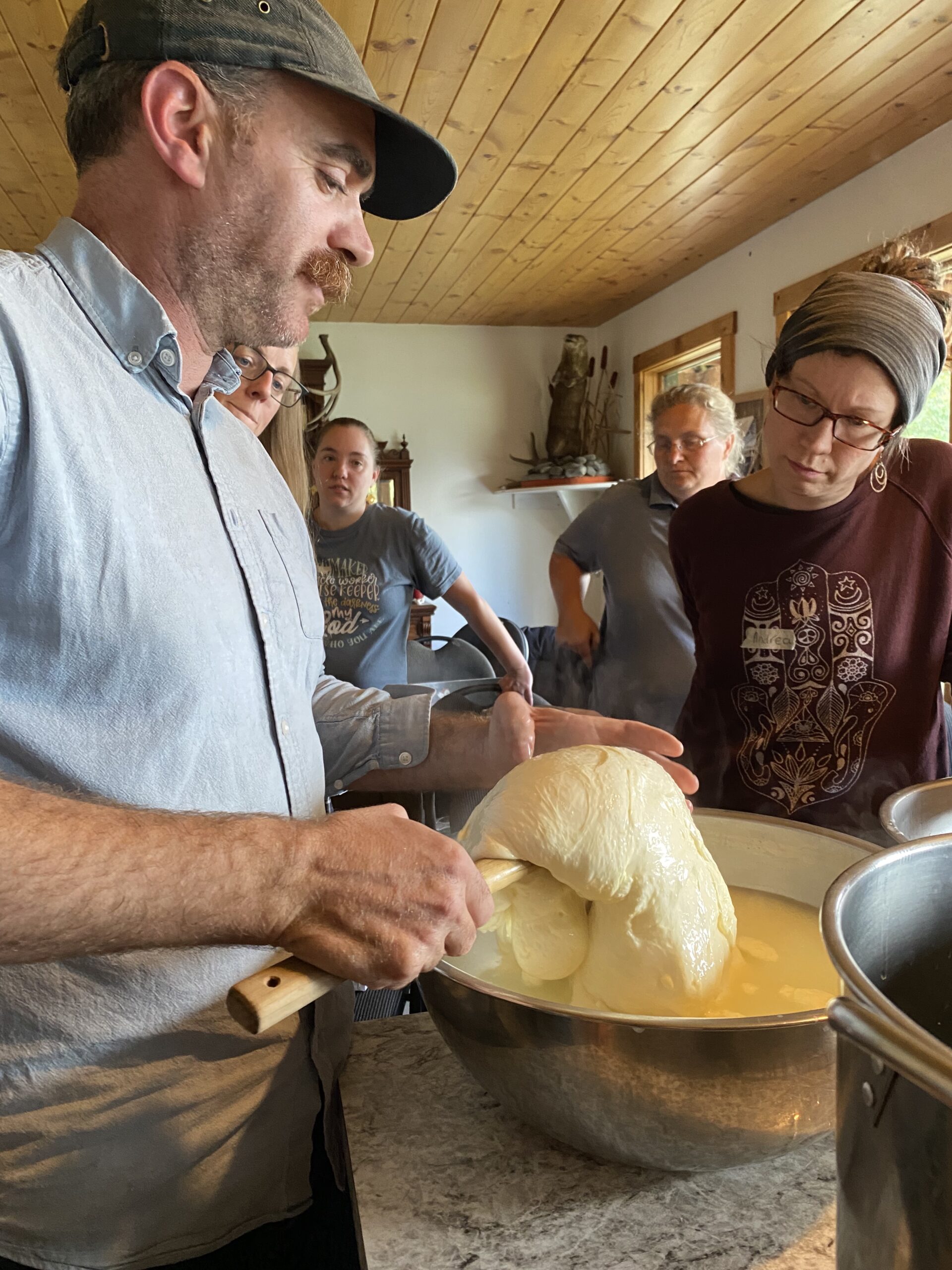
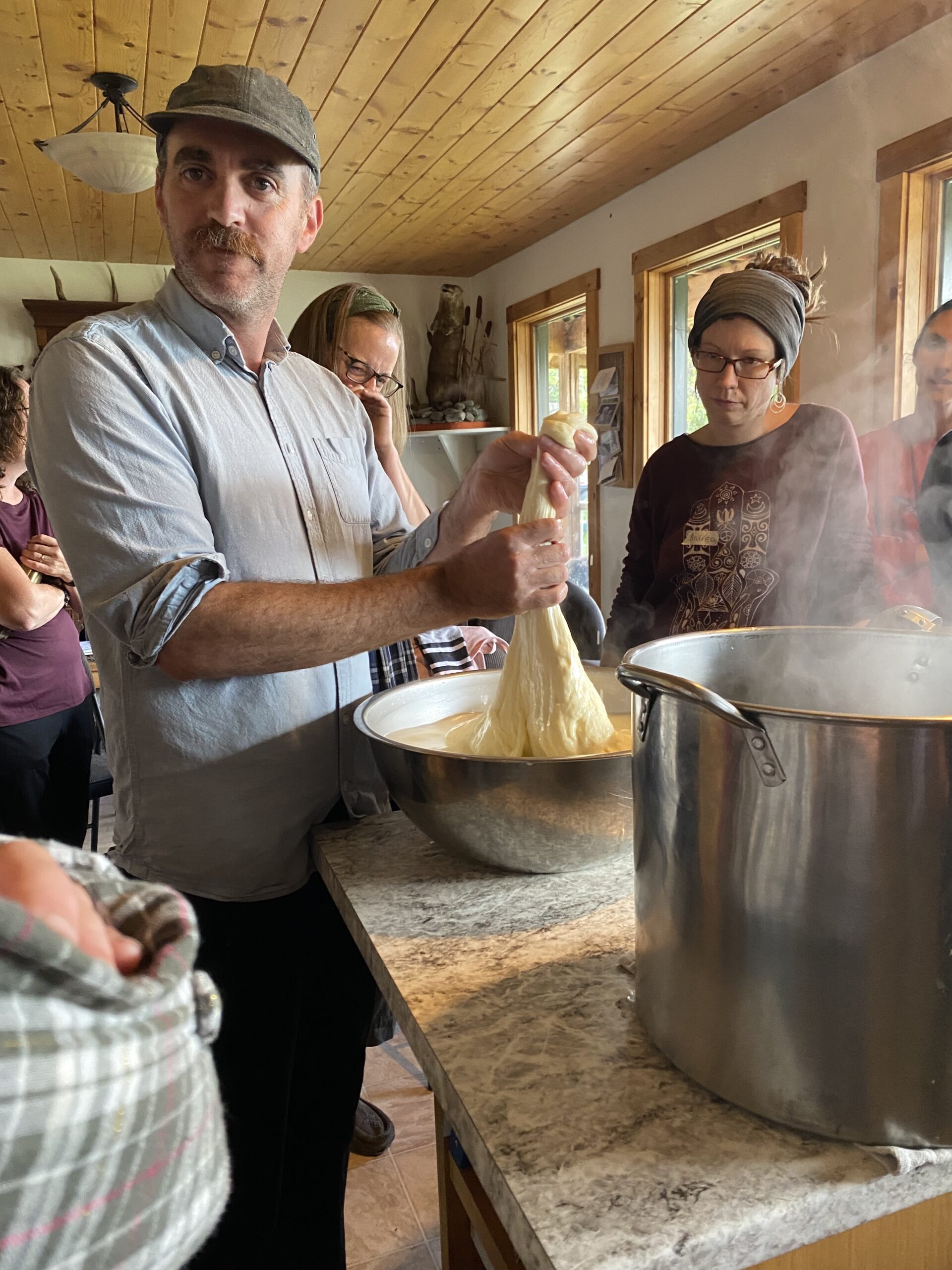
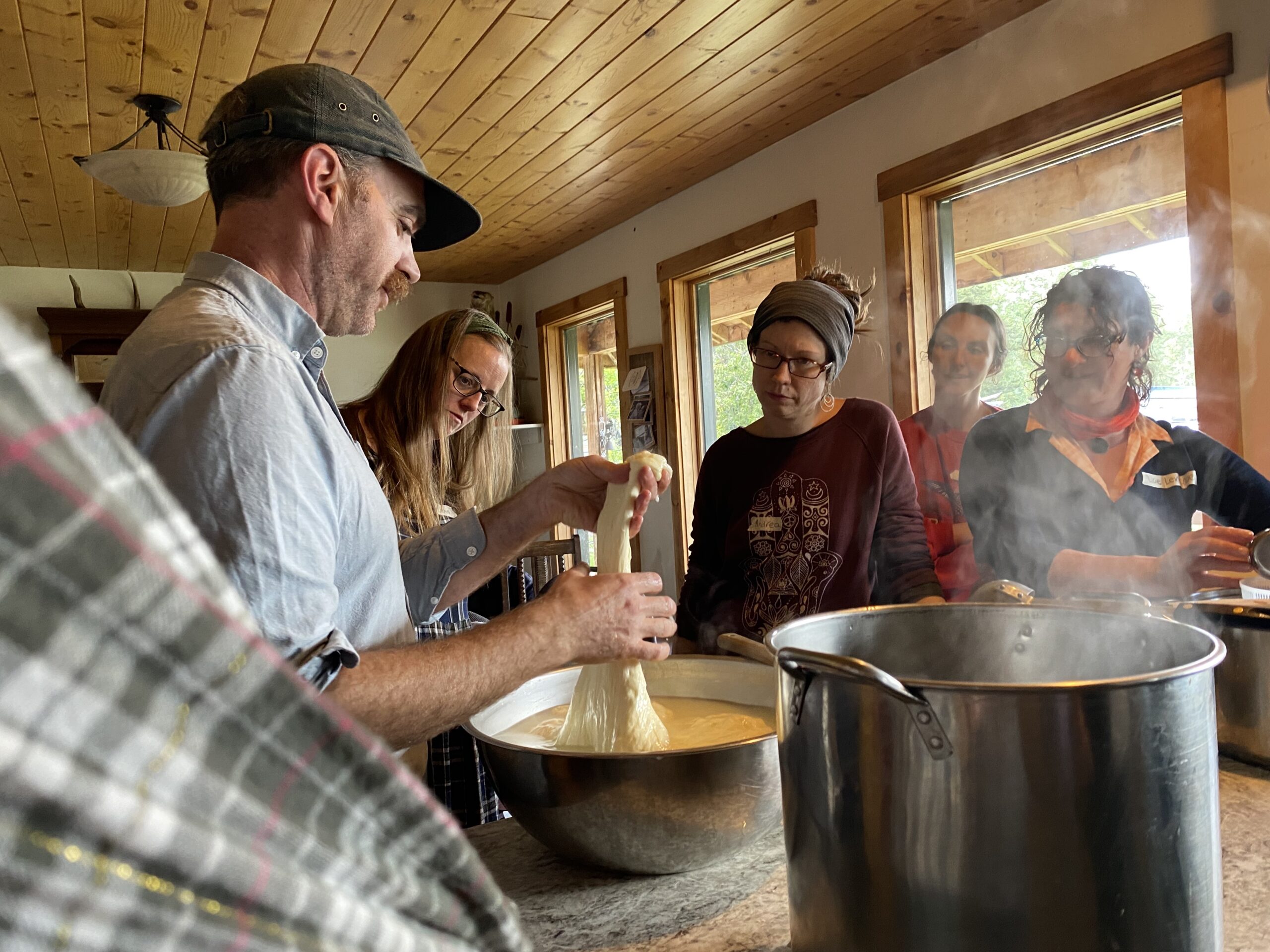
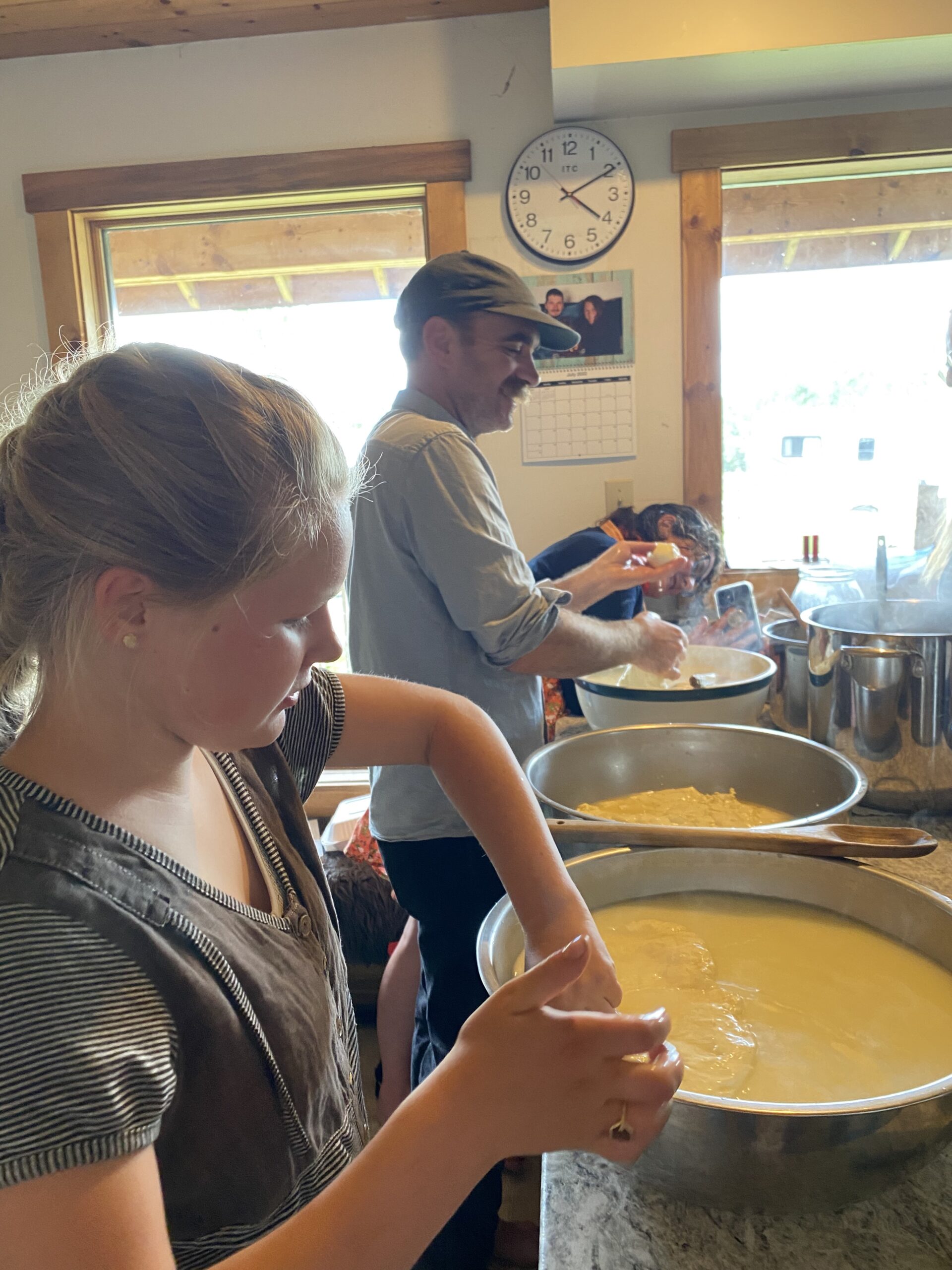
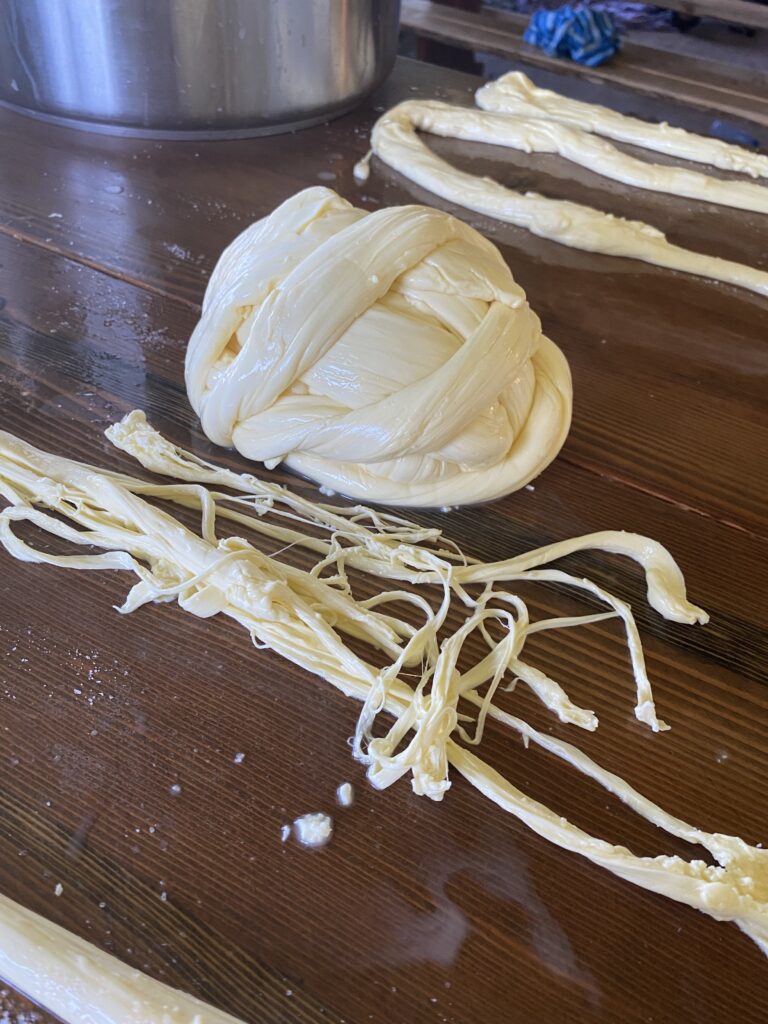
This last week I made a naturally acidified mozzarella, and I have shared the recipe with you in the recipe section. I am no stranger to making naturally acidified mozzarella, but this is my first time making it with a natural culture verses a freeze dried culture. It tasted amazing! I think that a naturally acidified mozzarella is a great starting point for us all, and as we learn together, I can’t wait to see your pictures of your mozzarella, be sure to share them on the Facebook group.
Next on my list is to try my hand at some quark, and cream cheese, but for now I am really enjoying keeping my clabber culture. There is something to be said about keeping sour milk on the counter. Our grandmas used to do it! I can’t remember by grandma ever keeping sour milk on the counter, but my mother in law, Maggie, talks about her grandmas sour milk often. Sour milk is so useful in many many different recipes. I have been using it in place of sour cream, yogurt, and buttermilk. At first after making it, it had a strong flavour, but after a few weeks of religiously feeding it every day, it has developed a mild flavour that, though is not something I would sit down and drink, is something that I am content to replace as an ingredient in all of our recipes.
When using clabber as a starter culture, David Asher instructed us to use it at the ratio of 1:50. That means if you had 50 cups milk, you would use 1 cup of starter culture. Its an inexact science, so don’t get to hung up on it. The most important thing to remember is to use a starter culture that has coagulated, but has not started to bubble or separate. Another fun fact that David filled us in on, is that if you are using a natural culture as a replacement for a freeze dried culture in a recipe, you don’t have to wait between adding the culture and the rennet. In many recipes, including some of mine and Davids recipes in his book (this is something he has learned since writing his book), you will find that there is a 1 hour waiting window between adding the culture and and the rennet. This waiting window is not actually traditional, instead it is more recent, created in the commercial setting for the use of freeze dried cultures. Its purpose is to allow for the milk to ferment slightly before adding the rennet. In a commercial setting the cheesemaker uses ph strips to test the cheeses progress through the entire cheesemaking day. After adding in the culture, he waits an hour before testing the milk with a ph strip, this lets him know that the culture is active and working so that he can continue on. If he does not see a change on the ph strip, he knows that the culture is inactive, or that specific virus’s that attack freeze dried bacteria, are present in his cheese pot. This allows him the opportunity to save his milk and add another active culture, before the rennet is ever added in.
You can see that as homestead cheesemakers, the journey is often befuddled by modern commercialized cheesemaking. It is work like Davids, and Trevor (@themilktrekker) that preserve the more traditional ways of cheesemaking and help us to take cheesemaking back to the homestead!
Sharing is caring!
One Response