
By Lacey Yates
Extended lactation is just what it sounds like: Milking an animal through (or more than a normal 305 day lactation) instead of breeding and drying them in preparation for kidding. Most prefer an every-other-year type of extended plan, but there are goats that successfully participate in extended lactation for 3-4 years! There are also specific lines of dairy goats that are bred and marketed specifically for extended lactation, but I really do think more goats are capable of this than we think.
Why would you want to participate in extended lactation? Besides the obvious reason of having access to milk year round, it can also appeal to those that do not have regular access to a buck. Not having to breed an animal every year can also benefit those that don’t want to deal with kids every year. Some find it fits their homesteading scene better to only freshen their goats every other year instead of every year, leaving them to worry about kids (and what to do with them if they aren’t retaining them) less often. Not freshening an animal regularly will also keep numbers in check if you’re one tempted to keep kids versus selling them, too.
What makes a goat a good candidate? Those that have a will to milk! Goats that show up every day, no matter the weather or other stress factors, and still put milk in the pail. Lazy milkers, or those that seem to be weak producers, generally seem to decrease production too much in the fall, and continue to taper off naturally themselves. These animals are next to impossible to milk through. While goats on extended lactation do decrease production in the fall naturally (due to less light, severe cold, less water intake…), they will also naturally increase production in the spring. However, consistent twice a day milkings at a consistent time will very much increase the likelihood of successful extended lactation. Supply and demand is a must here. It’s also worth mentioning the doe needs a steady supply of top quality feed. If her body doesn’t get what it needs to keep producing milk, she won’t!
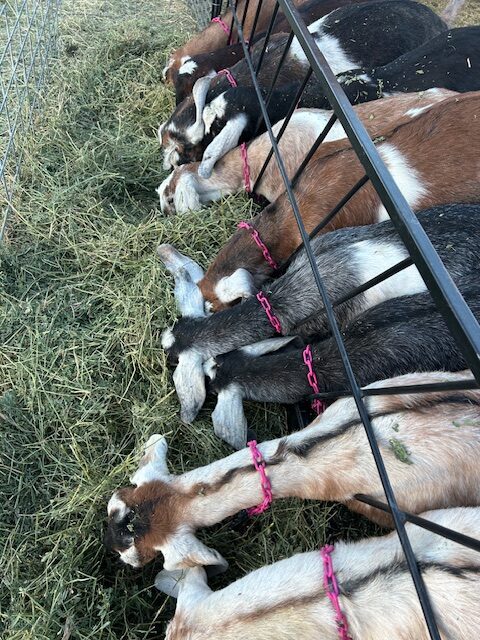
If you think extended lactation is right for you and you’d like to try it, I recommend having a backup plan just in case. As you know, goats are herd animals and are happiest when they have a friend, and if you have to have two… and they’re both does, seriously consider breeding one, and milking the other one though (rotating them the following year) until you know how they each respond to extended lactation. This way, if one isn’t a good participant, you can rely on the other for freshening to keep you in milk!
Early on in my dairy goat production career, I did participate in extended lactation. It was important to me to have a doe milk through and continue to have a consistent supply of milk with as few animals as possible. At that time, my very young infant depended on goat milk as a sole source of nutrition, so my goal was milk year round. In the beginning, I did buy one doe in milk (with a non milking companion) from a reputable breeder that does breed for extended lactation. It was a major benefit to me when I needed it most in providing milk for my daughter. As the years went on and my love of dairy goats and showing dairy goats increased, my goals changed. I found I needed to breed animals every year to not only to increase numbers and have the income of selling quality kids, but to also start making quick and big genetic improvements. I still can spot those good candidates even when milking on a 305 day lactation. Those does that are just not as willing to dry off, and the ones that show up every day to put their normal quantity of milk in the pail regardless of the snow storm that blew in with negative temps for days. I do recommend giving extended lactation a try if it’s something that you can benefit from.
One Response